

Cordish casino project turned down
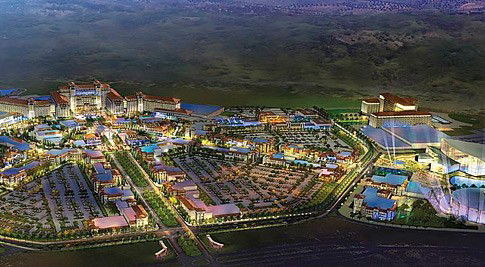
In a statement released on Friday, Madrid said the US developer had not shown that the project in its current form was “viable from an economic and organizational point of view”. The regional government also concluded that the plan would have forced Madrid to invest at least €340m in roads and railway links, to ensure access to the out-of-town complex.
Madrid said the decision had been taken after a “profound, serious and rigorous” assessment of the plans, and insisted that Cordish was free to resubmit the plan once the administration’s concerns are resolved. It also stressed that the region was “open to investment, both domestic and international”.
In a statement, Cordish said, “The government does not understand our application in two major respects. One, we make no requests for any public infrastructure nor any public subsidy by the government and in fact none is needed. Two, we are fully committed to a total build-out of a massive $2.2bn integrated resort.”
Cordish said it was “optimistic” that the regional government would ultimately come to understand its offer and approve its application.
“The project is extremely important to the regional Madrid economy,” it added. “The shame for the citizens of Spain in any delay is that we are prepared to immediately deliver the project, with construction commencing the second quarter 2018.”
The project was to have been Cordish’s first large-scale resort in Europe. Best-known for its redevelopment of Baltimore’s Inner Harbor, the family-owned company runs leisure districts and resorts in cities across the US.
“We feel that the Spanish economy is improving year after year, and that the Madrid economy in particular is strong and getting stronger. We are hitting this at the right time,” Joseph Weinberg, chief executive and managing partner, told the Financial Times in an interview last year.
Dubbed Live! Resorts Madrid, the project was supposed to hotels, theaters, cinemas and convention centres, along with shopping and restaurant areas and gaming facilities.
Madrid’s decision to block the plans, at least for now, makes Cordish the second prominent US developer to fall short in the Spanish capital. Sheldon Adelson, the casino mogul and a prominent conservative political donor, was forced to drop a planned $30bn gambling and entertainment complex outside Madrid three years ago.
The Las Vegas-style Adelson project would have featured an avenue of skyscrapers, 12 resorts, six casinos and 18,000 gaming machines in one of the biggest investments in Spain in recent memory. But it became bogged down in political controversy, not least over Mr Adelson’s demands for tax breaks.
Mr Weinberg said last year that there was no reason why the Cordish proposal should raise similar objections. “The mix [of businesses] and the concept are very different from previous attempts,” he said.
Nevada casino net income falls 34.8% following 81.2% drop on Las Vegas Strip


Win Systems appoints Ana Aniceto to lead Country Manager & Sales in Peru

1spin4win launches charity initiative 'United for Impact' to support children's healthcare in Kenya

Comtrade Gaming partners with 7bet for Latvia, Estonia and Finland expansion

Flutter to delist from London on 3rd August as NYSE remains main trading venue

Ready Play Gaming content set to go live via Nirmata Play


Hub Affiliations awarded at Le Fonti Awards 2026 as Excellence of the Year for Innovation & Leadership in iGaming


BetMGM, Kaizen Gaming and Sportradar lead winners at SBC Awards Americas 2026

Day 1 of SBC Summit Americas spotlights prediction markets, AI and industry challenges

Boomerang Partners launches second stage of Golden Boomerang Awards 2026


