

“In Brazil, the main shop window for the underground market is digital platforms and influencers”

Brazil’s first regulatory year for online betting is already showing meaningful progress, but also structural challenges that are preventing the licensed market from fully consolidating. In an exclusive interview with Yogonet, Andre Gelfi, a board member and co-founder of the Brazilian Institute for Responsible Gaming (IBJR), said regulation was decisive in creating a safer, more transparent and more professionalised environment.
However, he argued that the sector’s development has fallen short of its potential, largely due to the continued scale of the underground market and regulatory instability—particularly in the area of taxation.
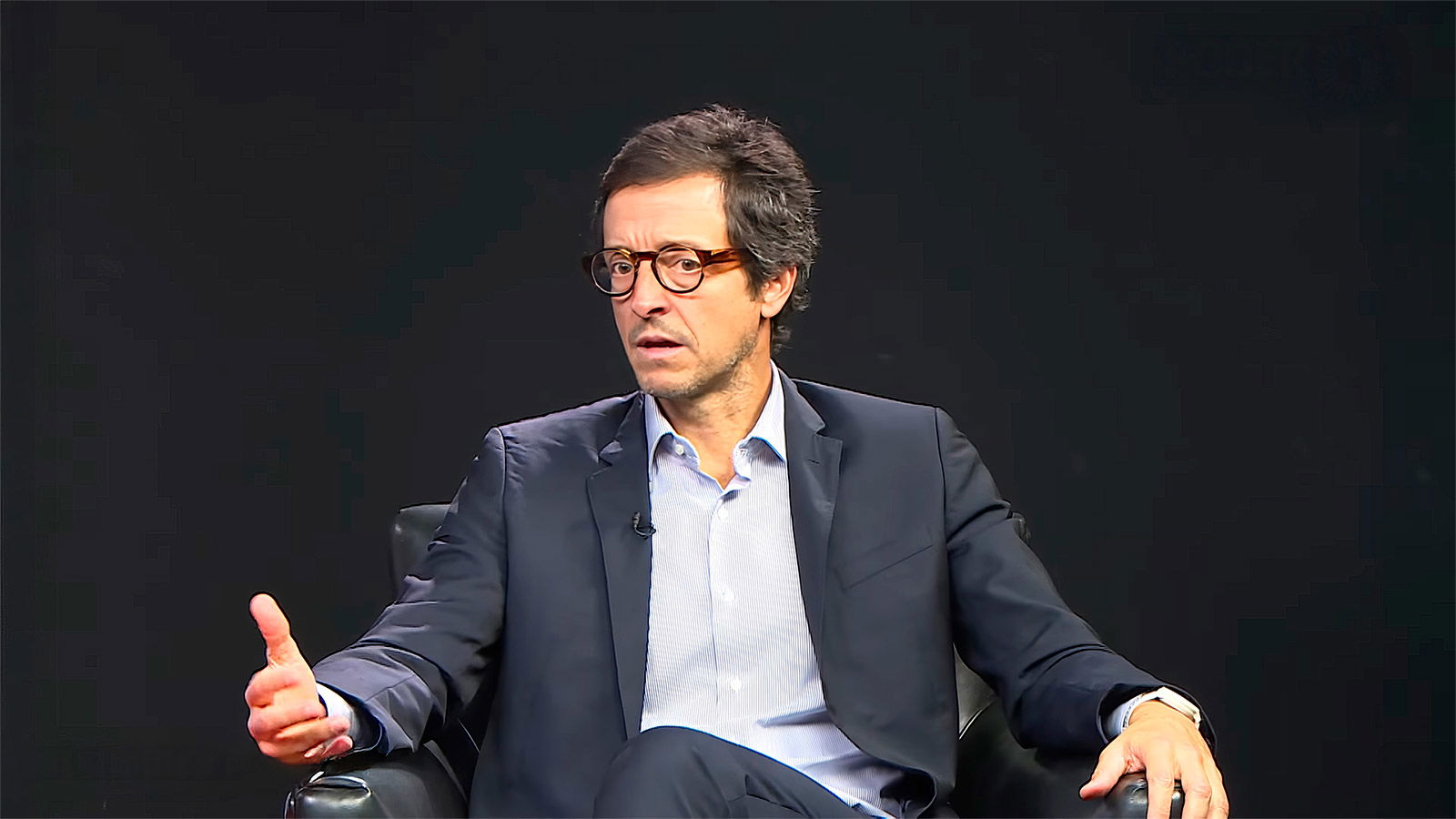
For IBJR, the balance between legal predictability, effective enforcement against illegal operations and the equal application of the rules will be decisive in strengthening the formal market and reducing informality in the coming years. Read the full interview below:
What is IBJR’s assessment of the first regulatory year in the sector? Has the licensed market developed as expected, or has it fallen short of projections?
The first regulatory cycle for Brazil’s online betting sector—consolidated through Law 14,790/23 and in force since January—represented an essential milestone in creating a safe, monitored and transparent environment. We now have identity verification mechanisms that reduce fraud risks and prevent minors from accessing betting, as well as new layers of payment traceability, self-limitation and self-exclusion tools, and sports integrity requirements that increase the security of competitions and bettors themselves.
The implementation of these rules has also significantly increased the professionalisation of licensed operators, which have invested in local teams, governance, technology and robust compliance practices. Unlike the underground market, which operates exclusively in the short term and at the bottom of the acquisition funnel, regulated companies operate with brand strategy, reputation and reference, which requires ongoing, long-term investment.
The fiscal effects of this new cycle are also relevant: from January to May 2025, more than BRL 2.3 billion was collected in licensing fees, and according to Brazil’s Federal Revenue Service, by October 2025 more than BRL 7.9 billion had been collected in taxes and social contributions, creating a permanent flow of resources for areas such as education, public safety, tourism and sport.
This level of revenue reinforces that the formal sector has already become a relevant economic driver, generating skilled jobs with salary levels above the national average and directly financing the country’s leading sport.
Even so, the regulated market has not fully developed for two central reasons. The first is the persistent strength of the underground market, which operates at low cost, without controls and with a strong presence on social media. The second is regulatory instability, especially in the face of proposals for sudden tax increases, which were a constant challenge throughout the year and created legal uncertainty for companies that structured themselves based on the rules announced at the end of 2024.
Measures such as CIDE-Bets, for instance, represent a concrete risk of penalising those who operate within the law and, paradoxically, strengthening the underground market.
Predictability is an essential asset in this sector, and its absence directly impacts Brazil’s competitiveness compared to other regulated markets. For IBJR, consolidating this first cycle means strengthening legal stability, intensifying the fight against the illegal market and ensuring that existing rules are applied on an equal basis, safeguarding the integrity of the regulated environment.

Is the illegal market still present in Brazil? On what scale?
Yes. Even after regulation, the illegal market remains significant in Brazil.
Research carried out by Instituto Locomotiva and LCA Consultoria Econômica at IBJR’s request shows that between 41% and 51% of betting volume still takes place informally. This means that millions of bettors remain exposed to platforms that do not comply with any safety standards, do not adopt facial recognition, do not promote responsible gaming, do not cooperate with sports integrity investigations and frequently use misleading advertising as an acquisition strategy.
It is important to be clear that 100% of illegal activity is, by definition, criminal in Brazil, involving crimes such as money laundering and offences against the popular economy. This is an organised operation sustained precisely by the absence of effective oversight in the digital environment.
The fiscal impact of this scenario is alarming: up to BRL 10.8 billion is not collected annually, diverting resources that could fund high-impact public policies.
But the problem goes beyond tax revenue. The underground market distorts competition, as it operates without paying taxes, without meeting obligations and without any regulatory barriers. In addition, these operators do not build brands: they constantly change their name, URL and servers, which makes simple website blocking ineffective unless accompanied by other structural measures.
From the consumer’s perspective, the risks are evident—exposure to scams, loss of balances, lack of dispute resolution mechanisms, absence of limits or protection tools and, in many cases, aggressive approaches that promise easy profits. This will remain a priority issue next year, requiring a coordinated effort among operators, public authorities and regulators.
What has failed so far, and which measures does IBJR consider a priority to reduce illegal operators’ share in 2026?
The underground market remains resilient because it operates without any regulatory cost, without effective oversight and with a strong capacity to adapt, including migrating servers, changing URLs and opening shell CNPJs to process payments via Pix.
Today, the main shop window for the underground market is digital platforms and influencers promoting supposedly “organic” content that, in practice, functions as a structured acquisition channel for illegal gambling.
While there is a growing effort by the Secretariat of Prizes and Betting, Anatel and the Central Bank, the overall scale of underground operations demands more decisive measures. The Ministry of Finance itself faces structural and budgetary constraints to oversee a market that moves billions of reais, which compromises the effectiveness of enforcement.
IBJR’s priority for 2026 is to advance on three fronts. The first is financial strangulation: Pix is demonstrably the main vector for illegal deposits, and the Central Bank is able to trace patterns, block repeat transactions and hold financial institutions accountable when they facilitate operations using fraudulent CNPJs.
The second is holding digital platforms and influencers accountable for promoting illegal sites. Social networks already have the technology to identify and remove harmful content, and the same level of scrutiny must be applied to the promotion of underground betting.
The third is holding game suppliers accountable. Today, suppliers sell the same product to both regulated and illegal operators, without any consequences. IBJR argues that these suppliers should only be allowed to operate in the Brazilian market if they exclusively serve licensed operators—otherwise, they should lose authorisation to operate in the country.
IBJR also believes it is essential to ensure regulatory stability, especially in taxation. Creating new taxes on bettors or on licensed operators in a market that is still consolidating is counterproductive and directly favours informality. The combination of predictability, effective enforcement and public awareness will be decisive in reducing the informal market’s share in 2026.
What is IBJR’s main message to companies that have decided to operate legally in an environment still dominated by informality?
Operating within the law is a strategic commitment to the sector’s sustainability and credibility in society’s eyes. Brazil’s regulated market already shows that those who follow the rules gain trust, attract investment and build a solid foundation for long-term growth.
This is a medium- to long-term game: companies are planting now, investing in brand, structure and local teams, to reap results sustainably in the years ahead.
IBJR recommends that operators continue investing in transparent communication, responsible gaming actions, sports integrity and initiatives that reinforce the sector’s social and economic value, even in a still-asymmetrical competitive environment.
How does IBJR view the emergence of new representative entities? Does it fragment the debate or strengthen the ecosystem?
IBJR believes it is important for the sector to remain united in addressing current challenges and promoting responsible gaming.
In 2025, the Institute demonstrated how it sees a collaborative stance as fundamental, taking part in working groups, engaging with regulators, contributing studies and organising awareness campaigns.
It also formed integrated fronts with other associations, showing that it views the sector as an ecosystem that can only evolve through convergence.


"The Gain City: Lauderdale campaign reflects how we see the Americas: as a region full of diverse, high-potential markets"


Flutter to delist from London on 3rd August as NYSE remains main trading venue

1spin4win launches charity initiative 'United for Impact' to support children's healthcare in Kenya

Win Systems appoints Ana Aniceto to lead Country Manager & Sales in Peru

Comtrade Gaming partners with 7bet for Latvia, Estonia and Finland expansion

Ready Play Gaming content set to go live via Nirmata Play


Hub Affiliations awarded at Le Fonti Awards 2026 as Excellence of the Year for Innovation & Leadership in iGaming


BetMGM, Kaizen Gaming and Sportradar lead winners at SBC Awards Americas 2026

Day 1 of SBC Summit Americas spotlights prediction markets, AI and industry challenges

Boomerang Partners launches second stage of Golden Boomerang Awards 2026


