

Plínio Lemos Jorge: “Tackling illegal betting websites will be the main challenge in Brazil for 2026”

The year 2025 marked a turning point for Brazil's online betting market. For the first time, the sector operated fully under a federal regulatory framework, facing new requirements, stricter oversight and an intense debate around taxation, the fight against illegal gambling and consumer protection.
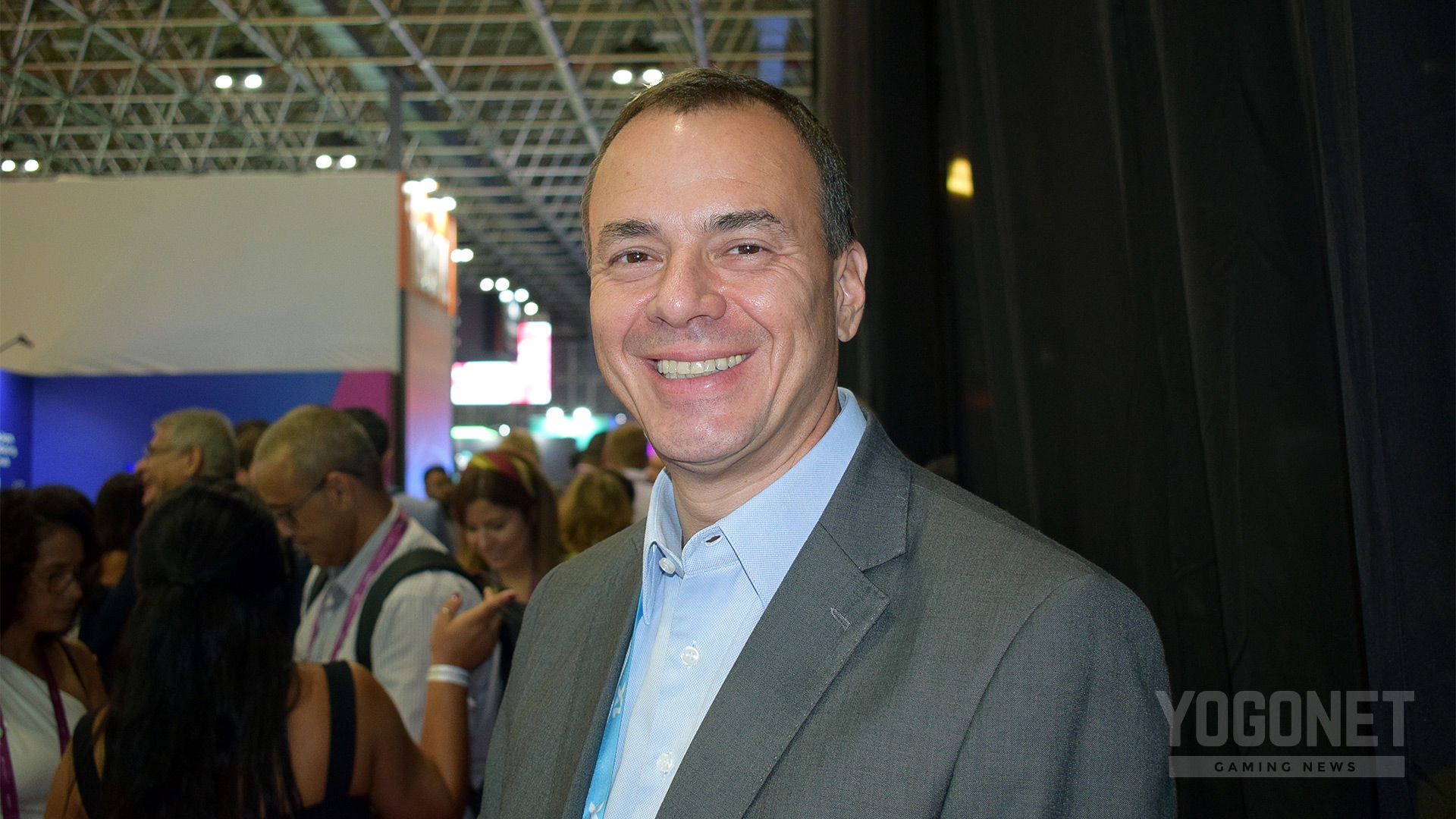
According to Plínio Lemos Jorge, President of the National Association of Games and Lotteries (ANJL), the period was challenging, yet essential for the consolidation of the industry.
In this exclusive interview with Yogonet, he analyses the progress achieved, the risks associated with over-taxation, the ongoing fight against clandestine websites and the key challenges facing the sector in 2026 — a year that will unfold against the backdrop of the largest World Cup in history.
How do you assess the past 12 months for the sector? Was it a positive or negative period?
I would say that 2025 was a challenging year, but a fundamental one for the consolidation of the sector. Our main efforts focused on two fronts: combating the illegal betting market and proposals for excessive taxation. Throughout the year, the sector was often treated as a "quick fix" for budgetary shortfalls, which raised an important warning about initiatives that could jeopardise the sustainability of the regulated market.
From the outset, our actions were guided by institutional dialogue, respect and a firm commitment to Brazil's economic development. We consistently stressed that excessive taxation produces exactly the opposite effect to what is intended: it encourages migration to illegal websites — controlled by criminal organisations with global reach — reduces tax revenue and puts licensed operators, who choose to operate legally, at risk. It is counterproductive and weakens the market precisely at the moment it is beginning to consolidate.
That said, 2025 was also a year of meaningful progress. ANJL, the Inspection Superintendence of the National Telecommunications Agency (Anatel) and the Secretariat of Prizes and Betting (SPA) entered into a strategic partnership to implement an automated system for identifying and blocking illegal websites — a decisive step towards reducing the space occupied by clandestine operators.
We also conducted market research that revealed relevant and worrying data: the federal government's initiative to prevent beneficiaries of social programmes from accessing sports betting platforms is likely to produce the opposite effect to what was intended. Almost half of these users (45%) say they would migrate to the clandestine market if the ban remains in place.
How would you describe ANJL's 2025? Could you outline the association's plans for 2026?
It was a year of institutional maturation. We established new partnerships, expanded our presence at strategic events and completed an important brand repositioning process. The new visual identity reflects the leadership role ANJL has assumed within a regulated sector legitimised by the federal government.
Throughout 2025, we took part in the industry's main events — including SiGMA Central Europe in Rome (Italy), ICE in Barcelona (Spain), iGaming Expo Brasil 2025 in São Paulo, the 2nd Brazilian Congress of Gaming and Betting Law (CBDJ) in Brasília, and the 13th Lisbon Forum in Portugal.
We closed the year by participating in the First In-Person Meeting on the Prevention of Money Laundering and Terrorist Financing, held in December by the Secretariat of Prizes and Betting, reinforcing our institutional commitment to integrity and regulatory compliance.
This agenda reflects ANJL's position as a representative body of a regulated sector committed to job creation, tax generation and economic development. It was the right moment to update our identity and reinforce our commitment to ethical, transparent action aligned with the Constitution.
Looking ahead to 2026, our focus will be on intensifying efforts to combat illegal websites and expanding educational initiatives aimed at consumer protection — especially in light of the World Cup, which naturally increases activity across the sector. We will also continue strengthening compliance, best practices and integrity initiatives, which are fundamental pillars for consolidating Brazil's regulated market.
Next year will be important for the betting sector not only because it marks a new phase of the regulated market, but also due to the largest World Cup in history. What are the main challenges and obstacles you foresee over the next 12 months?
I believe the main challenge for 2026 will be tackling clandestine betting websites. With the largest World Cup in history taking place, it is natural to expect a much higher volume of betting — and, with it, a likely flood of illegal offers, which are already a problem today.
This risk becomes even more pronounced if there is an increase in taxation for licensed operators. The heavier the tax burden on regulated companies, the greater the tendency for bettors to migrate to illegal platforms that follow no rules, pay no taxes and operate without any form of oversight.
There is still time to mitigate these risks. It is essential that both the sector and the government promote broad, coordinated awareness campaigns, informing the public about the dangers of the clandestine market and encouraging responsible gambling.
A combination of firm enforcement and consistent communication is crucial to protecting consumers and consolidating the regulated market at precisely the moment when it will be most exposed.
ANJL has entered the case before the Supreme Federal Court (STF) as amicus curiae regarding the constitutionality of municipal lotteries. Do you believe that betting operations run by municipalities create legal uncertainty and undermine the federal regulatory framework already in place?
ANJL believes that the operation of betting and lotteries by municipalities, without a clear legal framework and without integration into the federal regulatory system, does indeed create legal uncertainty and may compromise the organisation of the sector in Brazil.
A federal regulatory framework is already in force, defining technical, operational and supervisory parameters. When municipal legislation advances into this area, loopholes are created that can allow the illegal market not only to persist, but even to expand.
Although legalised and regulated, the betting market is still viewed negatively by parts of society and certain economic sectors, such as retail. Can 2026 help change this perception, or will it be a longer process? What can the sector do to help break down stereotypes?
There is still a great deal of misunderstanding about the sector. The natural expectation was that regulation would spark greater interest in understanding how this economic activity works, its revenue-generating potential and its capacity to create jobs.
However, part of the negative perception stems precisely from a lack of information — and, in some cases, from political initiatives that strategically exploit the topic to gain popular support, even if this results in lost revenue for states and municipalities.
Changing this image is possible, but it will not happen overnight. It requires continuity, transparency and closer engagement with society. The sector needs to communicate more effectively about its integrity practices, consumer protection mechanisms, efforts to combat illegal platforms and the positive economic impact that is already beginning to emerge with the regulated market.
Expanding dialogue with other segments of the economy — such as retail, which often views the sector as a competitor rather than a potential partner — also helps to break down stereotypes. The more society understands that this is a formal, supervised activity committed to responsibility, the faster we will move towards building a balanced, fact-based image.
"Ember represents a pivotal shift for both Delaware North and the real money online business"

"SBC Summit Americas is a great event because it gives us the opportunity to connect North America with Latin America"


Soft2Bet wins SBC award for Industry Innovation of the Year in North America
BetMGM's Brazilian venture moves to acquire Bingão do Brasil in market expansion push

California's Jamul Casino Resort brings in Marcus Lucero as Vice President of Casino Operations

Win Systems appoints Ana Aniceto to lead Country Manager & Sales in Peru


BGaming sets July date for second TRUE WAYS online conference

N1 Partners named finalist in three categories at G Gate Awards 2026

Boomerang Partners launches second stage of Golden Boomerang Awards 2026


