

Switzerland says ‘yes’ to online gambling, but seeks to block foreign sites
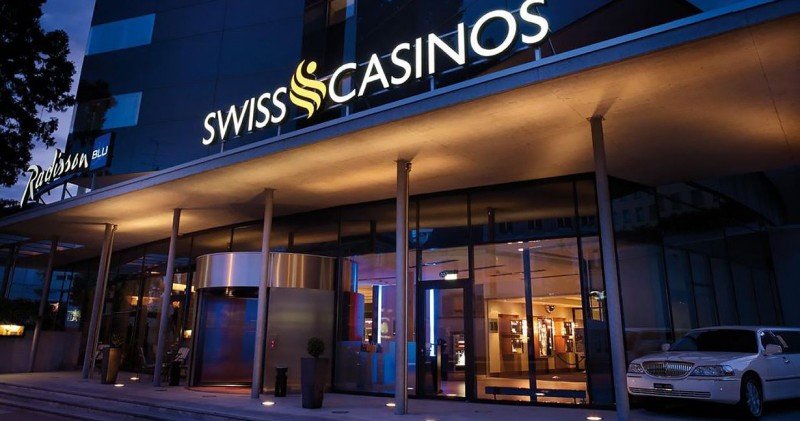
Switzerland's new Gambling Act won the support of 72.9% of voters, according to final results, despite accusations that the law amounts to online censorship.
The measure already approved in Parliament to legalize certified Swiss online casinos requires internet access providers to block all foreign betting sites. Under the law, approved by voters on Sunday, only terrestrial casinos in Switzerland can offer online gambling.
Due to take effect in 2019, the act, which will be one of the strictest in Europe, allows only Swiss-certified casinos and gaming firms to operate, Gizmodo reports. The law also includes measures against addiction.
"Voters prefer to continue the current policy, only allowing gambling under restrictions," Swiss Justice Minister Simonetta Sommaruga told a news conference.
According to Agence France-Presse, Sommaruga argued that the bans are necessary to ensure compliance with the nation’s laws on gambling, such as rules requiring them to block known addicts. Sommaruga also alleged that gamblers in Switzerland pour about 250 million francs (around $254 million) into foreign gambling sites which pay no in-country taxes and thus do not contribute to anti-gambling programs.
However, the amended law, to come into force at the beginning of next year, will not set a precedent for blocking other websites, she added, in response to concerns that it would lead to internet censorship.
Opponents said that the government could have instead offered incentives to companies that agree to be taxed, as well as “charge the new law will actually drain away revenues, since it raises the threshold for taxable winnings to over one million francs, compared with 1,000 francs today,” AFP wrote. Additionally, they alleged that the referendum on the issue was being driven largely by big money from Swiss casinos, who stand to cash in big time from a prohibition on using the internet to place bets with their competitors.
Critics have also noted that IP and domain bans are easily evaded using services such as a virtual private network. However, according to Intellectual Property Watch, legislators stressed that they were aware of the technical limitations but that other countries were nonetheless successful at moving gamblers to legitimate sites via this method.
Luzian Franzini, the head of the Greens’ youth wing, told AFP that the law sets a “very dangerous precedent” towards internet censorship and that there was a “generation gap” with lawmakers.
“They may not really have understood what this could do to the internet,” Franzini added.
Voters also overwhelmingly rejected a law called the Sovereign Money Initiative, per the BBC, which would have made Switzerland’s central bank the sole valid issuer of new currency (it currently only issues about 10 percent). Supporters characterized the measure as reining in the highly unstable world of global finance. Those in opposition said the measure was too radical and would undermine Swiss banks, which have seen some belt-trimming in recent years but still manage trillions of dollars in wealth.
Approval of the law is a "pragmatic decision by Swiss voters who want to continue funding civil society projects with revenue of the casinos and lotteries," according to Karl Vogler. The Christian Democrats led a parliamentary committee campaigning in favour of the law.
Opponents who had collected enough signatures to challenge the regulations approved by parliament last year, said it was difficult to appeal to a broad public with an issue as specific as gambling.
"We may have lost this battle, but put the issue of blocked internet sites on the political agenda," Radical Party parliamentarian Marcel Dobler told public radio SRF.
Swiss casino industry
The No campaigners, from several youth wings of political parties on the right and left, argued that the law was too restrictive and would pave the way for state censorship of the internet, Swiss Info reports.
Critics also believed it gave an unfair advantage to the Swiss casino industry by shielding it from offshore competition. And they said it failed to provide efficient protection for victims of gambling addiction.
At stake in this referendum were vast sums of money spent annually on gambling in the 21 licensed Swiss casinos, official lotteries and commercial bets.
Under a constitutional amendment confirmed by voters in 2012, revenue worth an estimated CHF1 billion ($1 billion) per year goes towards Swiss civil society as well as the state old age pension system.
Supporters of the law – the government, parliament as well as the cantons – warned that offshore casinos would win an increasing share of that revenue if the new rules were rejected. Sports, culture and social organizations risked losing a key source of funding.
Controversy
The pro and anti-campaigns ahead of Sunday’s referendum were marked by mutual allegations of undue lobbying from interest groups.
The law’s opponents were accused of relying on financial support from abroad, not only during the collection of the necessary signatures but also in the final phase of the campaign.
In the other corner, the Swiss casino industry was singled out for trying to boost its influence on Swiss parliamentarians.
Another part of the debate focused on plans to block online access to websites of casinos operated outside the country.
The opponents appeared to target younger voters by raising the spectre of censorship and further state intervention in the free use of online offers.
The government dismissed these allegations, saying at least 17 other European countries resorted to blocking websites of unlicensed gambling providers.
Limited impact and turnout
Striking features of the campaigns over past few weeks were the divisions among many of the main political parties and the business community. The latter showed noticeable restraint throughout.
Despite a lively debate on social media channels, the issue did not attract broad interest.
Observers say opponents failed to extend the scope of their campaign beyond the circles of digital natives, a generation which is notoriously underrepresented in ballot box decisions.
Turnout in the votes this Sunday was around 34% only.
In comparison, over 54% of citizens took part in the nationwide ballots earlier this year about scrapping the public broadcast licence fee system and an extension of the federal tax regime.

SOFTSWISS to host prediction markets webinar for iGaming operators on 25 June


Win Systems appoints Ana Aniceto to lead Country Manager & Sales in Peru

1spin4win launches charity initiative 'United for Impact' to support children's healthcare in Kenya

Comtrade Gaming partners with 7bet for Latvia, Estonia and Finland expansion

Flutter to delist from London on 3rd August as NYSE remains main trading venue

Ready Play Gaming content set to go live via Nirmata Play


Hub Affiliations awarded at Le Fonti Awards 2026 as Excellence of the Year for Innovation & Leadership in iGaming


Boomerang Partners launches second stage of Golden Boomerang Awards 2026

BetMGM, Kaizen Gaming and Sportradar lead winners at SBC Awards Americas 2026

Day 1 of SBC Summit Americas spotlights prediction markets, AI and industry challenges


