

AGA tells U.S. senators prediction markets are “backdoor betting operations” threatening regulated gaming
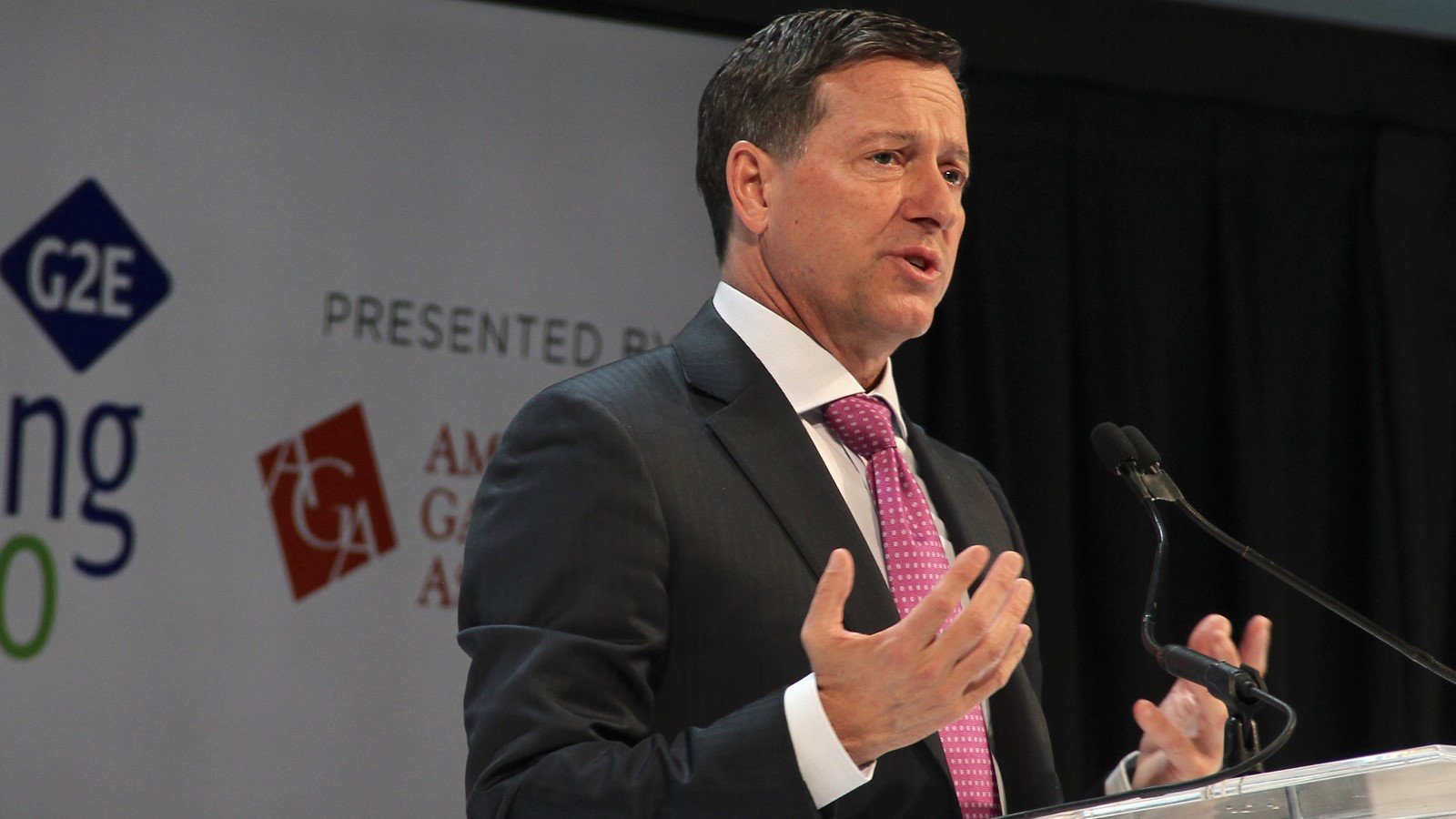
The American Gaming Association (AGA) used a U.S. Senate hearing this week to deliver one of its strongest warnings yet against the rapid expansion of sports prediction markets, arguing that the products are functioning as nationwide sports betting platforms outside the regulatory systems created after the repeal of PASPA.
Testifying before the Senate Commerce Committee’s Subcommittee on Consumer Protection, Technology, and Data Privacy, AGA President and CEO Bill Miller said prediction market operators are “repackaging” sports betting as financial products while bypassing state gaming laws, responsible gaming obligations and tribal frameworks.
“These products function as sports betting in every meaningful sense,” Miller said during the hearing, titled No Sure Bets: Protecting Sports Integrity in America. “Consumers are betting money on the outcome of sporting events and player performances.”
The testimony comes as companies such as Kalshi continue aggressively expanding sports event contracts across the United States under the oversight of the Commodity Futures Trading Commission (CFTC), triggering mounting opposition from gaming regulators, tribal groups, and state officials.
According to Miller, sports betting now represents approximately 86% of Kalshi’s business activity, compared to virtually negligible levels just two years ago.
“In 2024, sports-related activity on Kalshi represented just $227,000 in volume,” Miller said. “Today, sports betting accounts for approximately 86 percent of their business, and has already generated more than $47 billion in trading volume this year alone.”
The AGA executive argued that the rapid rise of sports prediction markets threatens the regulated gaming structure developed by states and tribes following the Supreme Court’s 2018 decision overturning the Professional and Amateur Sports Protection Act (PASPA).
Since then, 39 states and Washington D.C. have legalized sports betting through frameworks built around licensing, geolocation controls, responsible gaming requirements, anti-money laundering measures, and integrity monitoring.
“States should retain the right to determine for themselves whether sports betting is permitted within their borders and, if so, under what terms, protections, and regulatory safeguards,” Miller told lawmakers.
Throughout the hearing, Miller repeatedly framed prediction markets as an attempt to circumvent those state-level decisions through federal commodities law.
“Sports betting is being repackaged as a financial product bypassing the consumer protections, responsible gaming standards, and the state and tribal regulatory systems established after PASPA,” he said.
The testimony also focused heavily on tribal sovereignty, with Miller arguing that federally regulated prediction markets could undermine gaming compacts and tribal revenue structures built over decades under the Indian Gaming Regulatory Act.
“For many tribal governments, gaming revenue is a critical source of funding,” Miller said, noting that tribal gaming generated more than $16 billion in 2025 for healthcare, education, infrastructure, and government services.
The AGA also raised concerns over consumer protections and responsible gaming standards, particularly around age restrictions. While most legal sportsbooks require bettors to be at least 21 years old, prediction market platforms generally allow participation from users aged 18 and older.
“Prediction market platforms permit participation by 18-year-olds nationwide while offering products that are functionally indistinguishable from sports betting,” Miller said.
He added that nearly half of all digital sports betting advertising impressions now come from prediction market companies, despite those platforms not being subject to the same responsible gaming advertising requirements imposed on licensed sportsbooks.
“These platforms are aggressively marketing sports event contracts using language that blurs the line between investing and gambling,” Miller warned, citing campaigns referencing “building generational wealth” and “sports betting legal in all 50 states.”
The testimony repeatedly returned to integrity and oversight concerns. Miller argued that regulated sportsbooks have developed sophisticated systems for detecting suspicious wagering activity and sharing information with regulators, leagues, and law enforcement.
“Recent investigations involving athletes, coaches, and suspicious betting activity are concerning and should worry everyone in the room,” he said. “But they also demonstrate why the legal market not only matters, but is working.”
By contrast, Miller claimed prediction market platforms lack equivalent enforcement and monitoring systems while exposing consumers to similar integrity risks.
“Given that more than 90 percent of the volume is sports, a match fixing case on prediction markets is just a matter of time,” he warned.
Miller also pointed to broader concerns surrounding illegal and offshore gambling, which the AGA estimates still account for nearly $700 billion in annual wagering by Americans.
The organization urged Congress to reinforce state authority over sports wagering, strengthen enforcement against offshore operators, revisit the federal excise tax on sports betting, and support legislation such as the proposed Prediction Markets Are Gambling Act introduced earlier this year by Senators Adam Schiff and John Curtis.
“Sports betting must occur within the transparent, accountable state- and tribal-regulated systems specifically designed to oversee it responsibly,” Miller concluded. “Backdoor betting operations undermine the work and expertise of 8,400 industry regulators, consumer protections embedded in state and tribal law, and the will of voters across the country.”
FairPredicts launches ad campaign in D.C. targeting Kalshi ahead of Senate hearing

Polymarket launches prediction markets on private companies like OpenAI and SpaceX

Aristocrat Gaming launches Thunder Empire slot series in North America


EGT opens new office in Netherlands to expand local gaming market presence

GR8_TECH unveils new digital-first brand identity

Mohegan's Q2 revenue rises on record digital gaming performance

Gambling.com Group to cut around 25% of staff after profit drop and AI restructuring push

Falcon Dive transforms into a sovereign intelligence platform company

Altenar invites industry professionals to Malta Business Talks networking event

New Vor Turbo demo site shows how operators and affiliates can turn sports data into live engagement

Payments without friction: How integrated financial infrastructure supports global gaming expansion


N1 Partners to attend, sponsor and compete for awards at MAC Yerevan 2026

LiGA Summit chairperson says localisation and compliance will define success in LatAm gaming


