

Court orders new review of New Jersey's casino smoking ban exemption
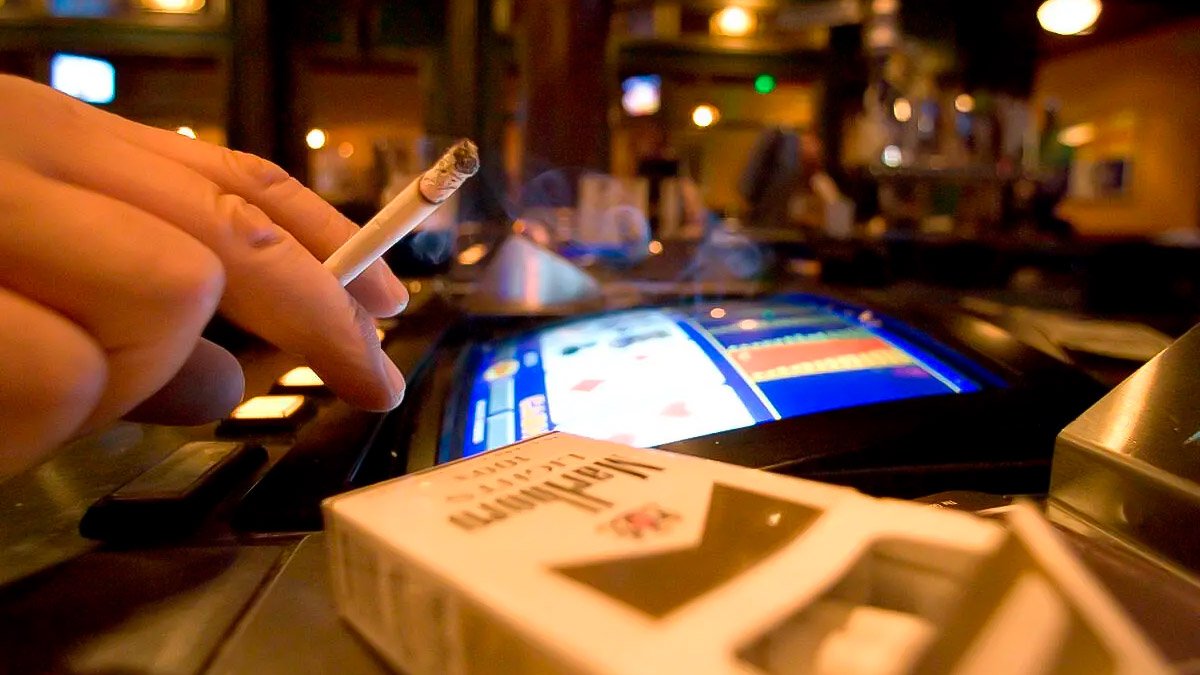
With legislative efforts to end casino smoking stalled, New Jersey courts are again set to examine whether the industry’s exemption from the indoor smoking ban violates the state constitution.
That review was reopened on Monday after a New Jersey appeals court ordered a lower court to restart proceedings challenging the casino exemption under the 2006 Smoke-Free Air Act, ruling that procedural missteps prevented a fair evaluation of the claims.
The case centers on the Smoke-Free Air Act, which bars indoor smoking statewide while allowing it inside casinos and simulcasting facilities. Casino floor workers, represented by the United Auto Workers, have argued that the exemption exposes them to secondhand smoke and violates constitutional protections. The union is joined in the lawsuit by Casino Employees Against Smoking Effects.
The challenge returned to court after legislative efforts to eliminate the exemption stalled, despite wide support among lawmakers, due to concerns about the potential impact on casino revenue.
In August 2024, a trial court judge dismissed the lawsuit. The judge found no constitutional right to safety, ruled that provisions of the New Jersey Constitution related to Atlantic City permitted special legislation for casinos, and rejected equal protection claims. The court also reasoned that affected workers could seek other employment and that casino revenue considerations supported keeping the exemption.
The appeals court found that approach flawed. According to Monday’s ruling, the trial court decided the case based only on written briefs, without testimony, and failed to develop a factual record despite disputes over projected revenue losses and health effects tied to indoor smoking, according to New Jersey Monitor.
The appellate panel also ruled that the trial court applied the wrong legal standard. Instead of using the three-part balancing test required for equal protection claims under the New Jersey Constitution, the lower court relied on a rational basis analysis.
“On remand, the court shall allow the record to be developed and litigated to address the hotly contested projections of revenue loss, and for the court to make appropriate findings of fact concerning the reliability and credibility of the competing expert projections. Such findings are especially crucial to the ultimate disposition of plaintiffs’ state equal protection arguments, with the health of thousands of casino employees and, perhaps, millions of dollars at stake,” Judge Jack Sabatino wrote for the three-judge panel.
Economic evidence played a central role in the appellate court’s decision. The panel criticized the trial court for deferring to a casino-funded report that concluded banning indoor smoking would significantly reduce casino revenue. That report stated that losses would occur if smokers shifted to casinos in other states or paused gaming to take smoking breaks.
The plaintiffs cited a separate study concluding that smoking and non-smoking casinos perform at similar levels. The appeals court said the trial court accepted the casino-funded report without adequately weighing the competing study presented by the workers and anti-smoking advocates.
“The trial court improvidently accepted at face value respondents’ disputed economic contentions and the untested premise that ending the smoking exemption will inexorably result in drastic revenue and job losses, without a development of a fuller record,” Sabatino wrote.
The appeals panel declined to rule on whether the New Jersey Constitution establishes a general right to safety, stating that the issue falls outside the scope of its review.
“If such a sweeping right is recognized for the first time, it should be by the Supreme Court as the ultimate arbiter of our State Constitution,” Sabatino wrote.
The smoking exemption has been temporarily lifted before. When he was governor, Phil Murphy prohibited smoking inside casinos for about 11 months during the pandemic. The restriction was lifted in June 2021. Murphy left office last week.
Pennsylvania lawmakers propose bipartisan bill package to address problem gambling


Allwyn AG names Khalid Reede Jones as CEO of North America unit


FIRST.bet wins Sports Betting Supplier cateogyr at EGR B2B Awards

Bally’s Intralot reaches $326 million deal to acquire William Hill and 888 owner Evoke

ReferOn lands two EGR B2B Awards 2026 shortlist nominations
Allwyn AG names Khalid Reede Jones as CEO of North America unit


Pidiots and the future of slot engagement: Why Slotmatic is building the intelligence layer behind the next generation of slots

Hub Affiliations awarded at Le Fonti Awards 2026 as Excellence of the Year for Innovation & Leadership in iGaming

Plinko, lottery, online casino: how Europe searches for iGaming


NOVOMATIC draws industry interest with product portfolio at Belgrade Future Gaming 2026



