

Arkansas: Attorney General turns down casinos' ballot proposal
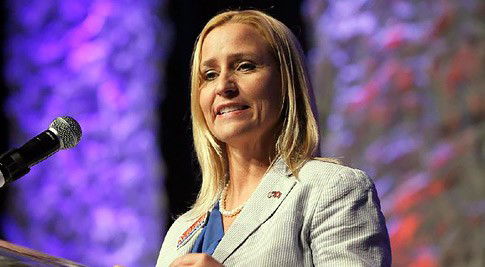
Rutledge stated that a number of changes and additions were necessary but that she couldn't summarize all of the needed adjustments because of fundamental ambiguities in the text, reported Arkansas Times. "A fatal deficiency of primary importance, in my opinion, is the complete lack of information regarding casino licensing under your proposal, and whether there is any correlation between ownership of the properties listed in your proposal and licensing of a casino or a casino operator," she wrote.
To proceed, the ballot measure first needs to be certified by the attorney general. At that point, the amendment would need to collect around 85,000 signatures of registered voters by July to make it on the ballot in November. The Ethics Commission paperwork establishing Arkansas Wins as ballot-question committee lists Mark Diggs (president), Robert Womack and Ronald Oliver as members of the committee.
Another group, Driving Arkansas Forward, launched a separate ballot-initiative effort earlier this year, which would allow three casinos to be built in the state. The first would be in Jefferson County, then one would be in Crittenden County, and the third and final casino would be in either Miller, Mississippi, Pope, Union or White County. Driving Arkansas Forward — chaired by lobbyist Don Tilton, with a legal team stacked with current and former legislators — has had proposed its proposed ballot measure rejected by Attorney General Leslie Rutledge three times this year.
They'll try again, as will the Arkansas Wins group.
Here's the discussion from Rutledge on the rejection of the Arkansas Wins proposal:
A fatal deficiency of primary importance, in my opinion, is the complete lack of information regarding casino licensing under your proposal, and whether there is any correlation between ownership of the properties listed in your proposal and licensing of a casino or a casino operator.
Section 4 of your measure states-at least with respect to the four locations specifically designated for casinos-that "all licenses hereunder" would be subject to laws passed by General Assembly. However, it is unclear what "licenses" this phrase is meant to refer to. The measure does not clearly provide for any actual licenses. Moreover, it is silent regarding any licensing process.
This silence regarding the licensing process is particularly problematic because also left unaddressed is the relationship or correlation, if any, between ownership of the properties your measure describes and the licensing of a casino to be located on those properties. As mentioned above, Section 4 references "[t]he initial licensed casino operator" after each legal description of the four properties where casinos would be authorized under your proposal. But your proposal does not indicate-much less state-who the initially licensed casino operators would be, how they would be selected for a license, or what their qualifications must be to operate a casino. If it is your intention that the owner or owners of the described properties would be, simply by virtue of such ownership, the initially licensed casino operators at each property-without any other qualifications-this fact must, in my opinion, be disclosed in a ballot title, together with the identity with these owner(s).
Furthermore, even if the land ownership does not guarantee a casino-operator's license, knowing who owns the land would still be of critical importance to the voters, as the adoption of your proposed amendment would in all likelihood lead to an immense increase to the value of those properties. Thus, in my opinion, ownership of the properties must also be disclosed in a ballot title. The Court has on more than one occasion rejected ballot initiatives "that failed to disclose in the ballot title the direct benefits to a 'relatively few' special interests. "
As the Court stated, "the majority of voters will read a proposed amendment for the first, and only, time when they read it on the ballot. Thus, it is crucial that the ballot title not be misleading, and that it disclose enough information so that voters can make 'an intelligent choice and be fully aware of the consequences of their vote. "' In this instance, I think that it is unrealistic and insufficient to expect voters to know, based on your proposed ballot title, who owns the parcels or where they are located within each county.
Moreover, it is unclear from your proposal whether the owner or owners of these properties (and the initially licensed operator(s), if they are not one and the same) would be constitutionally granted the exclusive right to have a casino on their properties, be licensed casino operators, or both. If that, too, is your intention, I believe this information would also give voters serious ground for reflection and therefore must be disclosed in a ballot title for the measure.
As a final note, and while not reason alone for me to reject your popular name and ballot title, I must mention that your ballot title is quite long, containing 1,036 words. As I have explained in the past, while the Court is willing to give the citizen-initiative process under our constitution a liberal construction when determining the sufficiency of a ballot title, the Court has clearly stated "that does not mean that liberality knows no bounds or [that] common sense has no place in the matter." As the Court explained: While neither the length nor complexity of the ballot title should be a controlling factor, it is a consideration. The great majority of Arkansas voters are limited, as a practical matter, in the amount of time that can be spent considering such a proposal. Furthermore, common sense requires that we ask whether the average voter can make an intelligent considerate decision based on the ballot title.
With these precedents in mind, prudence would suggest that you consider whether a ballot title of a length like the one you have submitted would meet the Court's standards for intelligent consideration by the voters in the allotted time.
Little Caesars founders form new gaming unit, take full control of Atlantic City's Ocean Casino

Pennsylvania gaming revenue hits record $625.5 million in May
California and Minnesota AGs push back on CFTC over prediction markets


Entain reportedly considering sale option for CEE Venture as UK gambling tax costs mount

Fast Track partners with Meridianbet to support customer engagement across 18 markets

SafeCasino named Best New Casino at AskGamblers Awards 2026

Digitain wins Platform Provider of the Year at SBC Awards Americas 2026

Real-time rewards: Why decision quality matters more than speed


Ready Play Gaming content set to go live via Nirmata Play


Zitro draws record operator attendance at fifth Zitro Experience Peru event

Peru Gaming Show wraps up with criticism of consumption tax and discussion of World Cup betting activity