

New Jersey racing industry takes sports betting appeal to Supreme Court
The petition asserts that a 24-year-old federal law that bans Las Vegas-style betting on sports in all but four states is unconstitutional because Congress does not have the authority to prevent the gambling in states that seek to allow it.
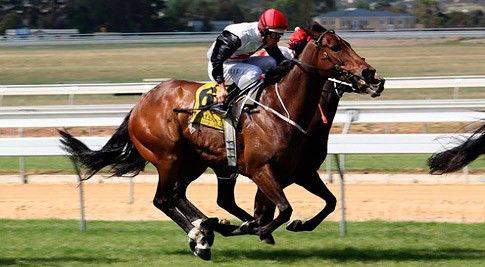
Monmouth Park, home to the vast majority of the state’s thoroughbred horse races, is missing out on gross revenues of $1 million a week, according to Ron Riccio, a lawyer representing the state’s horse racing industry. Dennis Drazin, who operates the track for the horsemen, said sports betting could produce a net subsidy for racing purses of about $25 million annually before the state’s other racetracks and Atlantic City’s casinos eventually came aboard as competition should the betting be legalized.
The effort to bring legal sports betting to New Jersey has been pitched as a way to boost the fortunes of the state’s struggling horse tracks and casinos.
““A 2014 report by the Rutgers Equine Science Center estimated a $780 million negative annual impact to the state’s economy should the racetracks and then its breeding farms shut down operations
”
“The only business revenue stream that can save Monmouth Park at the present time is revenue from sports betting,” Riccio wrote to the nation’s highest court.
The appeal also references what it calls the “enormous profits” from daily fantasy sports that the NFL and other pro sports leagues have reaped through partnerships with that burgeoning industry. The horsemen say that daily fantasy sports may be illegal based on the same law that the leagues are using to prevent the state from allowing sports betting.
A lawsuit filed in New York State Supreme Court earlier this week seeks to strike down a law passed in that state in August that permits FanDuel and DraftKings to offer daily fantasy contests, in which participants put up entry fees from $1 to $10,000 and then have a chance to make money depending on how athletes on a virtual roster perform in actual games.
The state has lost a pair of 2-1 decisions at the 3rd U.S. Circuit Court of Appeals. In the first case, the panel affirmed a lower-court ruling that found that the state’s sports betting law illegally authorized the tracks and casinos to offer sports betting in conflict with a federal law, the Professional and Amateur Sports Protection Act of 1992. That law prevents most states from “authorizing” sports betting.
““In the second case, the court found that a revised sports betting law that Christie signed in 2014 ceding regulatory authority to the state’s tracks and casinos amounted to a de facto authorization that also was improper
”
The horsemen are interveners in a 2012 lawsuit that four pro sports leagues and the NCAA filed against Christie seeking to bar implementation of the first sports betting law.
The cost of the multi-year legal dispute now exceeds $5 million, state officials said, with the money coming from fees paid to the Casino Control Fund and the state Racing Commission.
The Supreme Court declined to take up the sports betting case after being petitioned in 2014.
A spokesman for the state Attorney General's office, which also is a defendant in the case, declined to comment.
Wisconsin governor begins tribal talks to advance online sports betting rollout

Nevada casino net income falls 34.8% following 81.2% drop on Las Vegas Strip
Liga MX names Polymarket its exclusive prediction market partner for the US


Comtrade Gaming partners with 7bet for Latvia, Estonia and Finland expansion

Flutter to delist from London on 3rd August as NYSE remains main trading venue

Win Systems appoints Ana Aniceto to lead Country Manager & Sales in Peru

1spin4win launches charity initiative 'United for Impact' to support children's healthcare in Kenya

Ready Play Gaming content set to go live via Nirmata Play


Hub Affiliations awarded at Le Fonti Awards 2026 as Excellence of the Year for Innovation & Leadership in iGaming


BetMGM, Kaizen Gaming and Sportradar lead winners at SBC Awards Americas 2026

Boomerang Partners launches second stage of Golden Boomerang Awards 2026



