

Singapore casinos shift bets to mass market
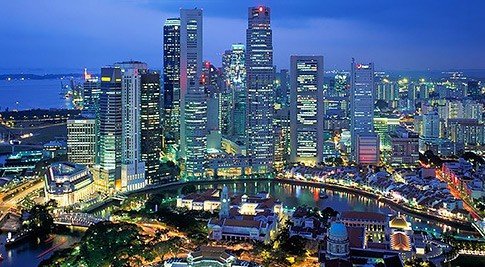
That slump was underlined this month when Resorts World announced it was cutting staff in its gaming business — a move necessary to “stay relevant in this challenging market”, it said in a statement.
Big-betting Chinese gamblers drive earnings at casinos across the region but they have scaled back their activity over the past two years in light of President Xi Jinping’s crackdown on graft and extravagance, as well as the impact of slowing mainland economic growth.
Gross gaming revenue in Macau, the Chinese territory that is the world’s biggest casino centre by revenue, dropped 10 per cent in May to $2.3bn from the same period a year earlier, dwindling for a 25th straight month.
““The pressures on Singapore’s casino add to suggestions that, for now, other markets are suffering the fallout from the China slowdown
”
Crown Resorts, the Australian gambling group controlled by billionaire James Packer, is spinning off its international investments into a separate company, partly to insulate its domestic business from the Macau slowdown.
Industry analysts have been debating whether the China clampdown will drive business to casinos elsewhere in Asia or simply shrink the size of the Chinese VIP betting market across the region.
The pressures on Singapore’s casino add to suggestions that, for now, other markets are suffering the fallout from the China slowdown.
Net profit at Resorts World’s owner Genting Singapore, which is controlled by Malaysia’s Lim family, fell 70 per cent last year to S$193m, the smallest profit since the casino opened in 2010.
The business, like rival Marina Bay Sands, has been squeezed by the anti-corruption crackdown and a surge in bad debt as unlucky gamblers leave without paying up. Casino revenue at Marina Bay Sands, owned by Sheldon Adelson’s Las Vegas Sands, dropped 10 per cent year on year in 2015.
““Tushar Mohata, analyst at Nomura, predicts the Singapore casino slump is bottoming out
”
The debt burden on Singapore casinos — Genting Singapore took a S$270m loss on trade receivables last year, up from S$262m the year before — contrasts with Macau, where casinos are more insulated from their gamblers’ misfortunes by using middlemen known as junket operators who provide credit to customers and collect debt.
Tushar Mohata, analyst at Nomura, predicts the Singapore casino slump is bottoming out, citing data showing the volume of VIP play at Genting stabilizing at S$8.5bn per quarter following a sharp drop immediately after the launch of China’s anti-corruption crackdown in 2014.
Non-gaming revenues at Genting’s Resorts World remain healthy, down only marginally from S$653m in 2014 to S$650m in 2015. Resorts World, based on the island of Sentosa off Singapore, also operates the Universal Studios theme park, an aquarium, hotels and restaurants.
Mr Mohata says: “Genting is doing quite well in non-gaming revenue. Marina Bay Sands hasn’t added any capacity since its hotel opened, but last year Genting opened a new hotel in Jurong — it’s a little further away from Sentosa, but the average room rate is lower and it appeals to the budget-conscious traveller.”
““Compared with the VIP sector, the mass market has not been as squeezed by the anti-graft drive as these travellers tend to be from other Southeast Asian countries, analysts say — though the weakening of regional currencies including the Malaysian ringgit will make it more expensive for tourists from neighbouring countries to visit Singapore
”
Jessalynn Chen, analyst at CIMB, says Resorts World is attempting to shift away from the VIP business to focus more on mass-market gamblers.
That mirrors moves in Macau, where the casino operators have also closed VIP rooms and opened new hotels and tourist attractions in an attempt to attract a wider customer base.
“They have been redeploying [staff] who used to work in the VIP business, to the mass-market segment,” Ms Chen says. “They’re also trying to bring in new customers with promotions such as bringing in Michelin-starred chefs.”
Compared with the VIP sector, the mass market has not been as squeezed by the anti-graft drive as these travellers tend to be from other Southeast Asian countries, analysts say — though the weakening of regional currencies including the Malaysian ringgit will make it more expensive for tourists from neighbouring countries to visit Singapore.
Still, Singapore’s casinos are likely to continue to face pressure from intensifying international competition for high-spending Chinese tourists. Hong-Kong-listed Imperial Pacific has opened a casino in Saipan, a US-administered Pacific island, while casino businesses are expanding in South Korea and Vietnam.
Grant Govertsen, head of Asia equity research at Union Gaming, says: “There’s plenty of supply coming on. The pie is not going to get much bigger and it’s going to be cut into more slices.”
Day 1 of SBC Summit Americas spotlights prediction markets, AI and industry challenges

Boomerang Partners launches second stage of Golden Boomerang Awards 2026

BMM Innovation Group to exhibit at Perú Gaming Show 2026 in Lima


Flutter to delist from London on 3rd August as NYSE remains main trading venue

Win Systems appoints Ana Aniceto to lead Country Manager & Sales in Peru

WagerWire receives Gibraltar approval in principle for prediction markets push

MGM China shares fall after Pansy Ho sells entire MGM Resorts stake

Ready Play Gaming content set to go live via Nirmata Play


Hub Affiliations awarded at Le Fonti Awards 2026 as Excellence of the Year for Innovation & Leadership in iGaming


Day 1 of SBC Summit Americas spotlights prediction markets, AI and industry challenges

BetMGM, Kaizen Gaming and Sportradar lead winners at SBC Awards Americas 2026


