

Tinian commission cancels Dynasty’s casino license
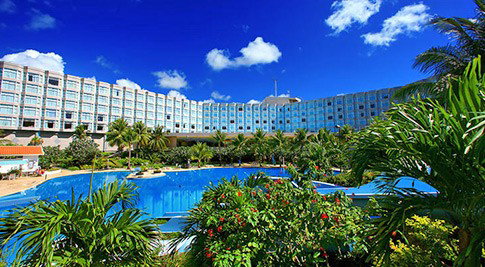
Tinian Mayor Joey Patrick San Nicolas said HKE could not meet the standards set by law. The gaming commission made the decision during a special meeting. The vote was 5 to 0 in favor of executive director William Cing’s recommendation.
He said HKE had failed to comply with the audit requirement for financial years 2008 through 2014 and failed to keep and maintain separate bank accounts in the CNMI for banking transactions related to the operations of the casino.
Moreover, Cing said HKE turned over the administration, management and operational control of the casino to persons who have not gone through a suitability check.
Mayor San Nicolas said: “While it was my hope that the municipality could somehow assist HKE resume operations of the Dynasty casino, the liabilities that have been incurred by HKE in the course of conducting gaming activities are insurmountable. As I stated at the beginning of my administration, we will do everything in our ability to continue fostering our casino industry. However, it has to be clear that these endeavors must be within the confines of the Gaming Act. Given all that has been said and done, HKE could not meet the standards set forth by law, and I applaud them for recognizing that while we are casino-friendly, we have rules that must be followed and this announcement was to be expected.”
“Over the past seven months -the mayor said- we have not generated any casino revenues and this has had a substantial impact on our ability to deliver programs and services. However, with planning and prudence we’ve managed to keep our people employed and to assist our school kids, the sick in our community and our manamko’ with the little resources that we have. I am proud of that record.”
““TCGCC's Executive Director William Cing said that when the people of Tinian voted to allow casino gambling in 1989, they also voted to provide strict regulations over casino gambling to be enforced by the commission through the Gaming Act
”
San Nicolas said they are “definitely far from being out of the woods, but through the leadership’s support, we were able to reach out to seek more investors and those efforts look like they are going to pay off. With the recent amendments to the Gaming Act, we should also expect a minimum of $1 million a year from casino license fees that would keep the [gaming commission] in operation to do what they need to in terms of vetting interested new applicants. I am cautiously optimistic that with hard work and continued collaboration with the Tinian leadership, we will see the Tinian Dynasty doors open sooner rather than later but with probably a different name.”
Commission statement
In a separate statement, the Tinian gaming commission said: “A casino operator is required to have its books, accounts and financial statements relating to the operations of its casino audited. The audit enables the municipality to ensure that the revenues reported by a casino are accurate, because the revenues are the basis for calculating taxes which can then be used for local public purposes such as education, law enforcement, programs for the youth and elderly which are vital to the public welfare of Tinian.”
Commission executive director William Cing said: “The requirement for separate and local bank accounts helps to ensure among other matters the accuracy of the revenues reported by a casino operator and therefore the accuracy of the taxes levied on the casino and the casino’s compliance with laws and regulations such as the anti-money-laundering law. A suitability check means checking the background and integrity of owners. It is a foundation of contemporary casino gambling regulation.”
Cing said that when the people of Tinian voted to allow casino gambling in 1989, they also voted to provide strict regulations over casino gambling to be enforced by the commission through the Gaming Act.
Wisconsin governor begins tribal talks to advance online sports betting rollout

Hard Rock Bet rolls out Matthew Broderick-led campaign for sportsbook and casino

Liga MX names Polymarket its exclusive prediction market partner for the US


1spin4win launches charity initiative 'United for Impact' to support children's healthcare in Kenya

Comtrade Gaming partners with 7bet for Latvia, Estonia and Finland expansion

Win Systems appoints Ana Aniceto to lead Country Manager & Sales in Peru

Flutter to delist from London on 3rd August as NYSE remains main trading venue

Ready Play Gaming content set to go live via Nirmata Play


Pidiots and the future of slot engagement: Why Slotmatic is building the intelligence layer behind the next generation of slots


Boomerang Partners launches second stage of Golden Boomerang Awards 2026

Day 1 of SBC Summit Americas spotlights prediction markets, AI and industry challenges

BetMGM, Kaizen Gaming and Sportradar lead winners at SBC Awards Americas 2026


