

State finds Brockton casino developer qualified to move ahead
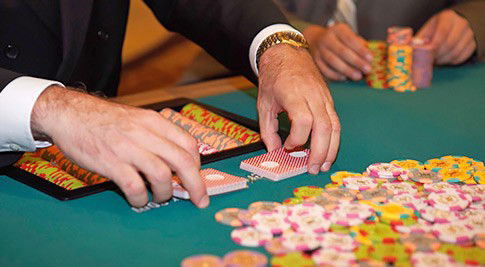
Members of the Massachusetts Gaming Commission unanimously found the developers "suitable" Wednesday, meaning they can continue to pursue a casino license.
The project must also be approved by city residents, who are scheduled to vote in a binding referendum May 12.
Commissioners took a vote during a public hearing at the Boston Convention and Exhibition Center. They attached four conditions to their approval, all dealing with the Brockton Agricultural Society, which owns the fairgrounds.
The project calls for a seven-story, 225-room hotel at the fairgrounds, along with a 240,000-square-foot gaming center, entertainment and event space, restaurants and 1,500 permanent jobs.
State investigators performed background and financial checks of nine entities and 14 individuals associated with the project. The review centered around those with developer Rush Street Gaming and also George Carney, the majority shareholder in the agricultural society.
Some of the firms and people had previously been deemed suitable by the state. Others, like Sweeney Investments, established by Carney to eventually act as a minority investor in the casino, were new to the process.
Rush Street Gaming affiliate Mass Gaming & Entertainment – the company applying for the casino license – and George Carney were both deemed suitable in 2013, when they applied for other gaming licenses. The company sought licenses in Millbury and Worcester, but abandoned both.
Carney and his wife, Laetitia Carney, were deemed suitable when they tried unsuccessfully to bring a slots parlor to Raynham Park.
However, the commission went about again confirming the applicants’ suitability “due to the passage of time and proposed changes in ownership.”
During their investigation, officials had trouble collecting information from the Brockton Agricultural Society, which plans to sell its land off Belmont Street property if the developer receives the casino license.
For example, investigators sought 20 years of the society’s meeting minutes and shareholder notices. They were only provided some of what they requested, prompting them to attach four conditions to their recommended approval.
The state must be provided, for instance, with information about transactions between the society and the Carneys regarding the fairgrounds property. Officials also mandated that the society’s books "be maintained according to generally accepted accounting principles."
Investigators also found issues with gaming fines related to Rush Street Gaming, according to a 70-page report submitted to the commission by Loretta Lillios, deputy director of the commission’s Investigations & Enforcement Bureau.
But despite those concerns, investigators recommended approval, saying that the company and its affiliates “have a history and reputation for self-reporting, instituting corrective actions, and paying regulatory fines in a timely fashion.”
1win launches FIFA World Cup 2026 tournament with 5M USDT prize pool

SmartSoft launches football-themed crash game World Champion X

Day 1 of SBC Summit Americas spotlights prediction markets, AI and industry challenges


Win Systems appoints Ana Aniceto to lead Country Manager & Sales in Peru

Comtrade Gaming partners with 7bet for Latvia, Estonia and Finland expansion

Flutter to delist from London on 3rd August as NYSE remains main trading venue

WagerWire receives Gibraltar approval in principle for prediction markets push

Ready Play Gaming content set to go live via Nirmata Play


Hub Affiliations awarded at Le Fonti Awards 2026 as Excellence of the Year for Innovation & Leadership in iGaming


BetMGM, Kaizen Gaming and Sportradar lead winners at SBC Awards Americas 2026

Boomerang Partners launches second stage of Golden Boomerang Awards 2026
Day 1 of SBC Summit Americas spotlights prediction markets, AI and industry challenges