

Sporttrade to exit US online sports betting markets while awaiting CFTC decision
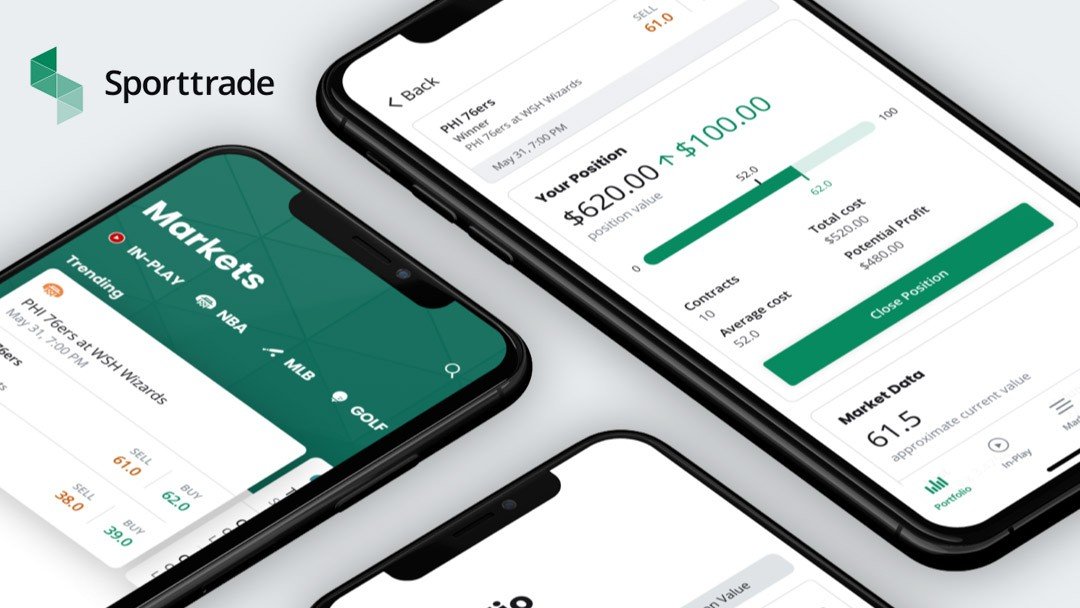
Sports trading marketplace Sporttrade will exit the US online sports betting market, ending operations across its licensed states by June 26, 2026.
The platform will close for business on May 25. New Jersey users have until then to withdraw funds from their accounts before they lose access, while users in Arizona, Colorado, Iowa, and Virginia have until June 25.
All remaining platform access will end on June 26, 2026. Any unclaimed balances will be mailed by check to the addresses listed in customer accounts.
The closure comes three months after Sporttrade sought approval from the Commodity Futures Trading Commission for designation as both a Designated Contract Market and Derivatives Clearing Organization.
The company submitted the applications in February after spending close to a year preparing separate bids for an exchange and clearinghouse structure. Sporttrade had initially pursued approval through state gaming regulators before later pivoting toward federal oversight through the CFTC.
“Today marks the opening of an incredibly exciting chapter of the Sporttrade journey,” Alex Kane, Sporttrade’s founder and CEO, said at the time. “The CFTC’s market-based regulatory framework enables Sporttrade to provide market participants an elevated level of efficiency, transparency, and consumer protection relative to what we’ve been able to offer to date.”
Kane also said federal oversight “will thus allow us to finally unlock the full potential of our natively-built exchange, clearing, and broker technology in our pursuit to always put the customer first.”
The company is still awaiting a decision from the regulator. Under CFTC procedures, the agency has a 180-day review period once an application is considered complete, although some applicants have waited years for final determinations.
Founded in 2018, Sporttrade launched sports contracts in New Jersey in 2022, more than two years before prediction market operator Kalshi introduced sports event contracts tied to the 2025 Super Bowl.
Sporttrade’s exchange-style model operated differently from traditional sportsbooks, an approach that often placed the company in uncertain regulatory territory. State gaming regulations were largely designed for conventional sportsbook operators and did not establish a specific framework for exchange-based sports trading products.
The company also entered the prediction market sector during a period when the CFTC opposed sports event contracts before President Donald Trump returned to office at the start of 2025.
“We had originally constructed our venue under the assumption that the sports trading vertical would follow the trajectory of most other electronic markets, one towards efficiency and transparency powered by broker intermediation and institutional participation,” Kane previously said when Sporttrade submitted its CFTC application.
Prediction markets have expanded rapidly in the US, partly due to nationwide availability and pricing structures that differ from regulated sportsbooks. Operators approved by the CFTC currently remain available in states where sports betting has not been legalized.
Industry opposition has also intensified in recent months. The American Gaming Association and the Indian Gaming Association recently sent another letter to Congress requesting action against prediction market operators that offer sports-related contracts nationwide.
According to a recent survey cited in reporting on the sector, 15% of Americans said they had already purchased prediction contracts, while 27% reported maintaining an active sportsbook account.
DraftKings CEO Jason Robins joins NEXTPredict NYC speaker lineup

Gaming executive Patrick Ramsey appointed to board of IGT and Everi parent company

Kalshi referred to regulators following NAD inquiry into influencer advertising disclosures

Gaming executive Patrick Ramsey appointed to board of IGT and Everi parent company

FairGambling enters crypto casino market with verification and analytics tools

Fanatics markets expands Fanatics ONE loyalty program with FanCash for Trader

EGT wins SiGMA Asia award for Best Land-Based Game Feature for second straight year


Hub Affiliations awarded at Le Fonti Awards 2026 as Excellence of the Year for Innovation & Leadership in iGaming

Pidiots and the future of slot engagement: Why Slotmatic is building the intelligence layer behind the next generation of slots

Plinko, lottery, online casino: how Europe searches for iGaming


1xBet confirms participation in Lagos Responsible Gaming Symposium
DraftKings CEO Jason Robins joins NEXTPredict NYC speaker lineup



