

Maine iGaming bill may face veto as poll shows strong voter opposition
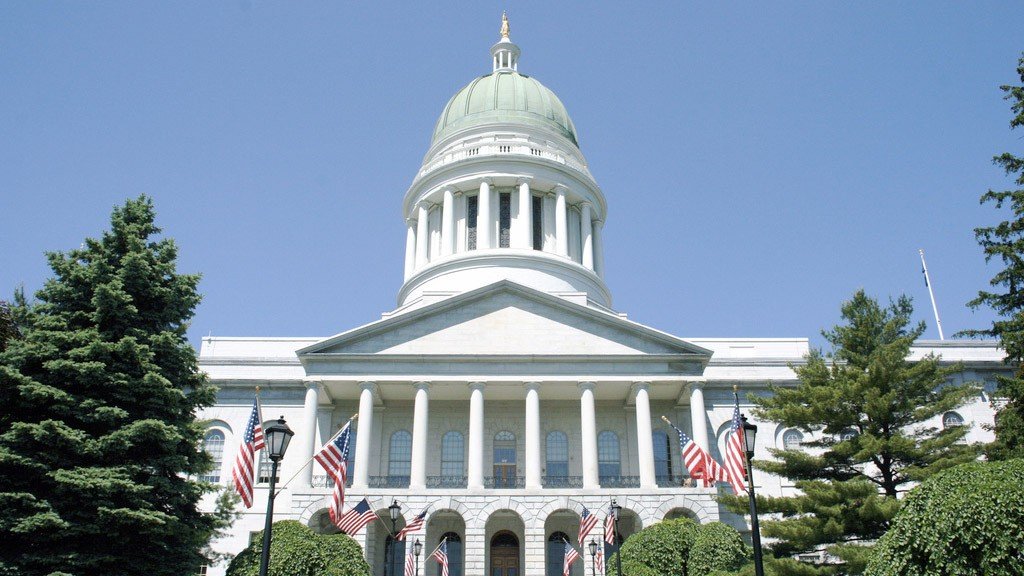
A bill that would legalize online casino gambling in Maine faces a possible veto from Governor Janet Mills as a new poll shows broad public opposition and state gambling regulators warn of job losses and market concentration.
The legislation, LD 1164, which has already been approved by Maine lawmakers, would allow the state’s four Wabanaki Nations tribes to offer online casino games through third-party operators. The bill would give tribal nations exclusive control over internet casino gaming in the state, offering games such as blackjack, poker, roulette, and baccarat.
Mills has a three-day window from Wednesday through Friday to veto the bill, beginning Jan. 7. If she takes no action, the legislation could become law without her signature. Mills is expected to veto the measure.
A poll commissioned by the National Association Against iGaming (NAAiG) and conducted by Lake Research found that 64% of Maine voters oppose legalizing iGaming, with 49% saying they are strongly opposed. Only 16% of respondents said they support legalization.
The survey found that opposition remained even when voters were informed of potential benefits, including new revenue streams for tribal gaming operators. It also showed that 51% of respondents would be less likely to support a political candidate who backs iGaming.
“Only seven states permit iGaming and none since 2023,” NAAiG said in a statement accompanying the poll.
The Maine Gambling Control Board has formally asked Mills to veto the bill, citing concerns that excluding the state’s two commercial casinos – Oxford Casino and Hollywood Casino – would create a monopoly for tribal partnerships with Caesars Palace Online Casino and DraftKings Casino.
The board warned that the structure could harm casino workers and consumers, saying nearly 1,000 employees at the commercial casinos could be affected if they are excluded from the online market. It also raised concerns about rising problem gambling and risks to responsible gambling efforts.
“Nearly 1,000 employees at these commercial casinos risk losing their jobs if excluded from the online casino market,” the board said.
Opposition to the bill cuts across party lines and includes commercial casino operators Churchill Downs and Penn Entertainment, which operate Maine’s two brick-and-mortar casinos.
NAAiG said that politically similar states, including Maryland, Massachusetts, New Hampshire, and New York, have rejected iGaming, warning that approval would make Maine an outlier in New England and nationally.
Currently, only seven U.S. states allow internet casinos: Connecticut, Delaware, Michigan, New Jersey, Pennsylvania, Rhode Island, and West Virginia. No state has legalized iGaming since 2023, and some analysts expect no new additions in 2026. Some industry experts believe Florida may be the only state to legalize iGaming by the end of 2027.
If enacted, LD 1164 is projected to generate $3.6 million in tax revenue by the 2026–2027 fiscal year, with funds earmarked for problem gambling programs, substance use disorder services, and housing initiatives.
Maine lawmakers are also reviewing a separate proposal to ban dual-currency online sweepstakes casinos. The Maine Gambling Control Unit has issued warnings about such sites, and further legislative review is scheduled for Jan. 14.
“Legalizing iGaming is deeply unpopular, politically risky, and viewed as a direct threat to children, families, and communities,” NAAiG said. “The responsible course of action is to veto this legislation.”
U.S. lawmaker proposes ban on House members using prediction markets

TaDa Gaming: "Being among the first certified providers gave us a clear first-mover advantage in Brazil"

Zenith: "Growth in Latin America is often more successful when it happens gradually rather than all at once"


Entain reportedly considering sale option for CEE Venture as UK gambling tax costs mount

SafeCasino named Best New Casino at AskGamblers Awards 2026

Fast Track partners with Meridianbet to support customer engagement across 18 markets

Digitain wins Platform Provider of the Year at SBC Awards Americas 2026

Real-time rewards: Why decision quality matters more than speed


Ready Play Gaming content set to go live via Nirmata Play


Peru Gaming Show wraps up with criticism of consumption tax and discussion of World Cup betting activity

Zitro draws record operator attendance at fifth Zitro Experience Peru event

Uplatform to showcase "iGaming supermarket" concept at iGB L!VE London 2026


