

NJ regulators weigh concerns over Eldorado-Caesars merger, hearings continue today
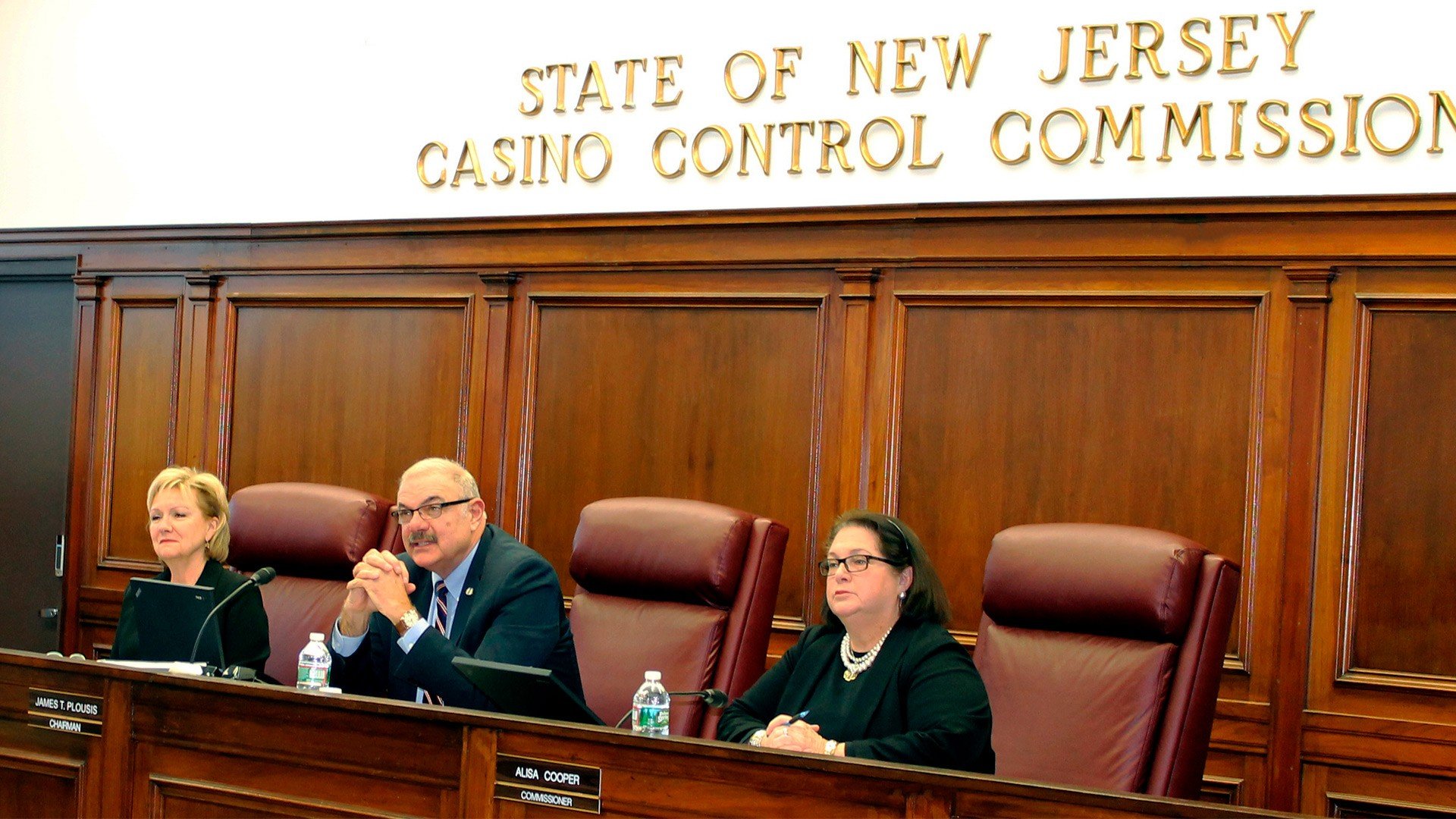
New Jersey Division of Gaming Enforcement expressed concerns on the proposed merger between Eldorado Resorts and Caesars Entertainment, following a second day of testimony Thursday where two economists presented differing analyses of the deal’s potential impact on the Atlantic City casino market.
In addition, Casino Control Commission Chairman James Plousis and Commissioner Alisa Cooper decided the Hard Rock Hotel Casino and the Ocean Casino Resort asked too late for time to comment before their votes, now scheduled Friday, on Eldorado’s bid to acquire Caesars, the Associated Press reports, so the companies’ request was rejected. New Jersey’s is the final approval needed for the $17.3 billion deal to be completed.
“In reflecting on the testimony presented, the division’s concerns, as they relate to the overall uncertainty associated with the transaction, remain,” Deputy Attorney General Tracy Richardson said on behalf of the Division of Gaming Enforcement (DGE), as reported by The Press of Atlantic City.
On the other hand, the attorney for Eldorado argued the newly created gaming company was well-positioned financially, committed to Atlantic City and the resulting merger would not negatively affect the market.
The Casino Control Commission is to resume hearings on the proposed deal at 10 a.m. Friday. New Jersey regulators must consider the proposal’s impact on market concentration and the financial stability of the resulting merger. Eldorado and Caesars currently operate four of Atlantic City’s nine casinos.

The DGE declined to issue a recommendation on the merger in its pre-hearing report to the commission until testimony had been concluded. On Thursday, after two days of testimony from multiple Eldorado executives and the two economists, Richardson said the DGE still had reservations. She noted the uncertainty of the effects of the coronavirus on gaming and tourism, the financial impact of casino capacity restrictions and the timetable for a market recovery as reasons for the division’s position.
“As we indicated in our report, the financial success of the merger will be determined, in many respects, by events and circumstances that are beyond the control of Eldorado and cannot accurately be predicted at this time,” Richardson said.
Eldorado currently operates Tropicana Atlantic City, while Caesars controls Bally’s Atlantic City, Caesars Atlantic City and Harrah’s Resort Atlantic City. The merged gaming company would keep the Caesars name — becoming Caesars Entertainment Inc. — and customer rewards program, while Eldorado senior management would oversee operations. Bally’s was recently sold for $25 million to Rhode Island-based Twin River Worldwide Holdings, pending approval.
The DGE report contained several recommendations for the commission to consider if the deal is to be approved. Among the conditions included in the report is the creation of a $400 million trust fund for capital investment over the next three years at Caesars, Harrah’s and Tropicana. The division also recommended the new company lift existing deed restrictions on casino gaming on three former assets of Caesars’, the Showboat Hotel Atlantic City, The Claridge hotel and the former Atlantic Club Casino Hotel.
Eldorado CEO Thomas Reeg said during Wednesday’s hearing “new Caesars” would adhere to both those conditions, as well as commit to reinvesting 5% of annual net revenue back into the Atlantic City properties.
Eldorado attorney Steve Schrier relied on the analysis of economist Timothy Watts, managing director at National Economic Research Associates Inc., as well as the testimony of five of the company’s executives Wednesday, to argue for approval of the proposal. Watts concluded that a merger of Eldorado and Caesars would not result in an undue economic concentration of casinos in the Atlantic City market. Schrier said his client was well-positioned financially to absorb Caesars and effectively operate casinos in Atlantic City.
Martin Perry, head of the economics department at the University of Illinois at Urbana-Champaign, argued in favor of certain conditions that would foster market competition. Perry, who has conducted several Atlantic City merger and acquisition analyses for the state, did not approve or disapprove of the merger outright.
Instead, Perry offered several recommendations for approval of the deal that would reduce the market share of the newly formed company, including selling one larger casino or two smaller properties. The sale of Bally’s alone, Perry said, would have the least impact on reducing market concentration.


Prediction markets hit record $5B during World Cup as bettors post multimillion-dollar swings


Entain reportedly considering sale option for CEE Venture as UK gambling tax costs mount

Fast Track partners with Meridianbet to support customer engagement across 18 markets

SafeCasino named Best New Casino at AskGamblers Awards 2026

Digitain wins Platform Provider of the Year at SBC Awards Americas 2026

Growth in iGaming is becoming more complex. So are the partnerships behind it.

Real-time rewards: Why decision quality matters more than speed


Gaming leaders debate regulation, prediction markets and the next phase of industry growth



