

Tax fix favoring planned Chicago casino passed by Illinois lawmakers
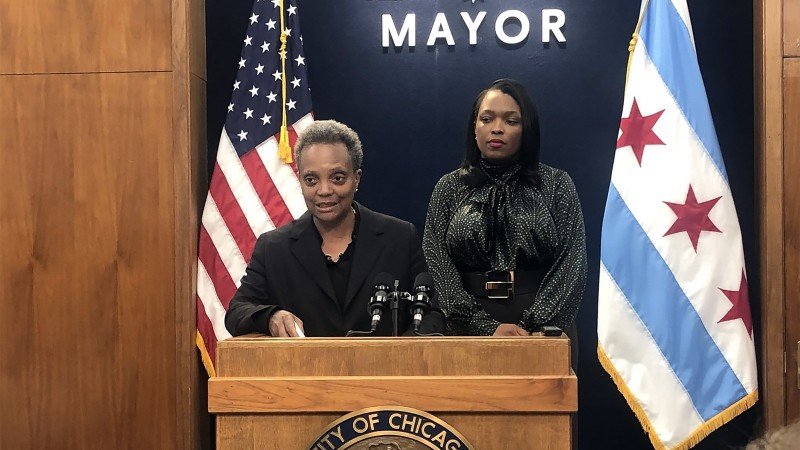
Before adjourning its extraordinary pandemic session, the Illinois General Assembly authorized Saturday the tax-and-fee fix needed to make a Chicago casino economically viable and attractive to a developer, a change Chicago Mayor Lori Lightfoot has been pushing for the past year. She said Tuesday she envisions a Chicago casino as a piece of a much larger entertainment complex, but she gave no details on the location or timeline for the project.
“I see this as a large entertainment district, not just the box of a casino. In order for us to maximize this once-in-a-generation opportunity that the General Assembly has given us and to maximize the opportunity for revenue, for jobs, for long-term economic viability of the city and, of course, to address our pension debt, we‘ve got to be thoughtful and intentional about what we’re designing so it’s something that attracts people from all over the world,” Lightfoot said, as reported by Chicago Sun-Times.
“That’s what I see. Chicago is a global city. We need a world-class entertainment district, of which a casino is a part, but not the entirety. So there’s a lot of work that needs to be done between now and then and we’re anxious to get started,” she added.
After the House passed the bill earlier, the Senate approved the casino changes late Saturday by a 42-14 vote, sending the measure to Gov. J.B. Pritzker, who has pledged to sign it when it reaches his desk. Mayor Lori Lightfoot praised the legislature’s action late Saturday as making “the possibility of a financially viable Chicago casino a reality,” Chicago Tribune reports.
Revenue from a Chicago casino is considered a key to the $45 billion capital bill passed last year. Pritzker has said he was eager to sign the gaming legislation, as it “provides a reliable funding stream” to the statewide construction plan and in a statement late Saturday credited Lightfoot and legislators from both parties for bringing it to fruition.
After lawmakers last year approved a massive gambling expansion that authorized six new casinos across the state and legalized sports wagering, a study found that the tax structure for the Chicago casino, which is higher than for the other casinos in the state, could make it difficult to attract investors.
In addition to changes to the tax structure, the legislation approved on Saturday would extend from two to six years the amount of time casino’s owners would have to make a reconciliation payment, another change Lightfoot has pushed.
The legislation also delays by a year, until July 1, 2021, the time by which gaming applicants must pay license fees. The coronavirus pandemic is driving that change, which is intended to help existing casinos in the state that have been closed and “would be very helpful for them in terms of how they’re going to reopen,” said sponsoring Rep. Bob Rita, a Blue Island Democrat.
After Pritzker's signature, City Hall will start looking at results of “focus groups, studies and surveys” on where Chicagoans want the casino to go and what amenities they’d like to see there.
Last summer, City Hall asked a consultant for the Illinois Gaming Board to study five sites on the South and West sides for their ability to attract financing. At the time, Lightfoot cautioned Chicagoans not to get “fixated” on those five sites because the list was “not definitive.”
The Gaming Board study famously concluded the tax and fee structure for a Chicago casino was so “onerous,” it could not attract an investor. But Union Gaming also concluded “only a centrally-located casino that is in close proximity to high-quality hotels and other notable tourist attractions” would be able to “meaningfully penetrate the robust tourism trends” the city of Chicago enjoys.
Wisconsin governor begins tribal talks to advance online sports betting rollout

Nevada casino net income falls 34.8% following 81.2% drop on Las Vegas Strip
Liga MX names Polymarket its exclusive prediction market partner for the US


Win Systems appoints Ana Aniceto to lead Country Manager & Sales in Peru

Flutter to delist from London on 3rd August as NYSE remains main trading venue

WagerWire receives Gibraltar approval in principle for prediction markets push

MGM China shares fall after Pansy Ho sells entire MGM Resorts stake

Ready Play Gaming content set to go live via Nirmata Play


Hub Affiliations awarded at Le Fonti Awards 2026 as Excellence of the Year for Innovation & Leadership in iGaming


Boomerang Partners launches second stage of Golden Boomerang Awards 2026

BetMGM, Kaizen Gaming and Sportradar lead winners at SBC Awards Americas 2026

Day 1 of SBC Summit Americas spotlights prediction markets, AI and industry challenges


