

Trump Taj Mahal officially shuts down
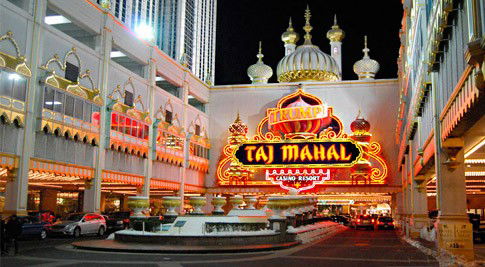
The shutdown, which leaves 3,000 employees out of work, was widely expected after management announced the planned closure in August. Beset by labor strife and the decline of Atlantic City as a resort and gaming destination, the hotel lost "almost $350 million over just a few short years," Icahn said in a statement Monday.
About 1,000 employees, including cooks, bartenders, housekeepers and cocktail servers, went on strike July 1, seeking health care and pension benefits. Icahn said his last offer, which included medical benefits, was rejected and keeping the Taj open would have required additional investments and result in losses in "excess of $100 million over the next year."
The union, Unite Here Local 54, says many workers at the hotel "have seen only 80 cents per hour in total raises over the last 12 years" while the cost of living in Atlantic City has risen more than 25% during the period.
"Workers are trying to reenter the middle-class after Icahn used the bankruptcy court to strip them of pay and benefits worth more than one-third of their total compensation," the union said in a statement released last month. "Housekeepers, servers and other casino workers at the Taj Mahal earn on average less than $12 and hour."
Meanwhile, Donald Trump in the race for the presidency — who took his Atlantic City casinos through bankruptcy four times — minced no words about Monday's shutdown of the gambling hall.
““There's no reason for this, Trump told The Associated Press in a recent interview as his friend and fellow billionaire Carl Icahn prepared to close the casino
”
Just before 6 a.m. Monday, the Taj Mahal shuttered its doors amid a strike by union members that lasted more than 100 days. It is the fifth Atlantic City casino to close since 2014.
Trump said both sides should have been able to work out a deal to keep the casino open. Local 54 of the Unite-HERE union went on strike July 1, after it could not agree with Icahn on a new contract to restore health insurance and pension benefits that were terminated two years ago in bankruptcy court.
Icahn decided on Aug. 3 to close the casino, saying it lacked a "path to profitability."
And now, Trump said, it's too late.
““Once it closes, it's too expensive to ever reopen it, he said
”
Yet that option is exactly what the union's president, Bob McDevitt, and many striking workers suspect might happen.
McDevitt said "there's a strong possibility" that Icahn will keep the casino closed over the winter while conducting renovations and capital improvements, then attempt to reopen it in the spring as a non-union facility. McDevitt said union job actions including picketing and a campaign to get convention groups to patronize other Atlantic City casinos would immediately resume if the Taj attempts to reopen without a union contract.
When asked about McDevitt's comments, Icahn spokesman Andrew Langham said: "Ask him whether the other four casinos he's closed ever reopened."
In August, just days after Icahn announced the closure plans, work crews repaired parts of the casino's facade and Boardwalk entry ways. The company said that those repairs needed to be done regardless of whether the casino is open or closed.
““The closure of the sprawling Boardwalk casino, with its soaring domes, minarets and towers built to mimic the famed Indian historic site, cost nearly 3,000 workers their jobs, bringing the total jobs lost by Atlantic City casino closings to 11,000 since 2014. Atlantic City now has seven casinos
”
More than a dozen striking workers interviewed Monday said they did the right thing by walking out. Tina Condos, a cocktail server at the casino since its opening, seemed triumphant despite the loss of her job.
"We stood up to a billionaire and told him we wouldn't take it," she said. "I hope it gives him pause before he tries to come in and do this to anyone else. We feel like we succeeded here."
Rose Hall, yet another Day One employee, cleaned rooms at the casino hotel.
"I gave most of my adult life to this place," she said. "I had to pay for health care out of my own pocket, and if you don't think that's expensive, you haven't looked. I lost my fiancee to cancer just when medical insurance came off the table for us."
She, too, has no regrets about the decision to go on strike to reclaim the same standard of living that workers at the city's other casinos enjoy.
"I'm angry about what's happened, but I'm not sad about what we did," she said. "I'm at peace with myself."
McDevitt said union members had what he termed "their Popeye moment: 'That's all I can stands; I can't stands no more,'" he said. "For the first time in 30 years, workers stood up to Carl Icahn and made him throw in the towel."
Langham had a different take.
"McDevitt stated that he applauds the workers for standing up to Icahn," Langham said. "Workers have lost their jobs, but McDevitt continues to receive his six-figure salary. It's no wonder he keeps applauding."
Icahn determined the $350 million he had lost in the Taj Mahal was enough. It was then that he decided to close, fearing he would lose an additional $100 million next year.
"Today is a sad day for Atlantic City," he said Monday. "Like many of the employees at the Taj Mahal, I wish things had turned out differently."
Liga MX names Polymarket its exclusive prediction market partner for the US

Nevada casino net income falls 34.8% following 81.2% drop on Las Vegas Strip


Comtrade Gaming partners with 7bet for Latvia, Estonia and Finland expansion

Win Systems appoints Ana Aniceto to lead Country Manager & Sales in Peru

1spin4win launches charity initiative 'United for Impact' to support children's healthcare in Kenya

Flutter to delist from London on 3rd August as NYSE remains main trading venue

Ready Play Gaming content set to go live via Nirmata Play


Hub Affiliations awarded at Le Fonti Awards 2026 as Excellence of the Year for Innovation & Leadership in iGaming


BetMGM, Kaizen Gaming and Sportradar lead winners at SBC Awards Americas 2026

Day 1 of SBC Summit Americas spotlights prediction markets, AI and industry challenges



