

Pope County casino plans thwarted as federal judge upholds Arkansas voter amendment

A federal judge has ruled against the Cherokee Nation in its legal attempt to revive plans for a casino in Pope County, Arkansas, siding with state officials and upholding a constitutional amendment passed by voters in 2024 that blocks casino gaming in the region.
In a 32-page decision issued Thursday, U.S. District Judge D. Price Marshall Jr. dismissed all claims brought by the Cherokee Nation, which had alleged that Amendment 104 violated multiple provisions of the U.S. Constitution.
The ruling follows a bench trial held earlier this year and marks a notable setback for Cherokee Nation Entertainment, which had invested heavily in a proposed resort and casino in the county.
“I applaud today’s ruling, which sided with the State of Arkansas and the Arkansas Racing Commissioners on all issues,” Attorney General Tim Griffin said in a statement following the court’s decision.
Cherokee Nation Businesses, which had been awarded the Pope County casino license by the Arkansas Racing Commission in June 2024, challenged Amendment 104 in court, arguing that it infringed on the Contract Clause, Takings Clause, and Bill of Attainder Clause of the Constitution.
The amendment, which appeared as Issue 2 on the November 2024 ballot, repealed the county’s authorization for a casino and mandated that any future casino location in Arkansas must be approved by local voters.
Judge Marshall dismissed the claims under the Contract and Bill of Attainder clauses with prejudice, meaning they cannot be refiled. The remaining claims under the Takings Clause were dismissed without prejudice, and the judge noted that the Cherokee Nation could still pursue compensation through the Arkansas State Claims Commission and General Assembly.
“We are reviewing all aspects of the judge’s ruling and considering next steps in the legal process,” said Allison Burum, spokesperson for Cherokee Nation Businesses.
Marshall’s opinion recounted the turbulent history of the Pope County casino license. After Arkansas voters approved Amendment 100 in 2018, casino licenses were made available in four counties: Crittenden, Garland, Jefferson, and Pope. While casinos quickly took root in the first three counties, Pope County became a flashpoint for legal challenges, community opposition, and rival bids.
Initially, the Pope County license was granted to Gulfside Casino Partnership in 2019, then rescinded and later awarded to Cherokee Nation Entertainment and its affiliate Legends Resort and Casino LLC. The Arkansas Supreme Court voided that license in late 2023, but the Cherokee Nation pushed ahead, acquiring 325 acres of land and spending more than $60 million on site development, staff hiring, and vendor contracts.
Arkansas Supreme Court
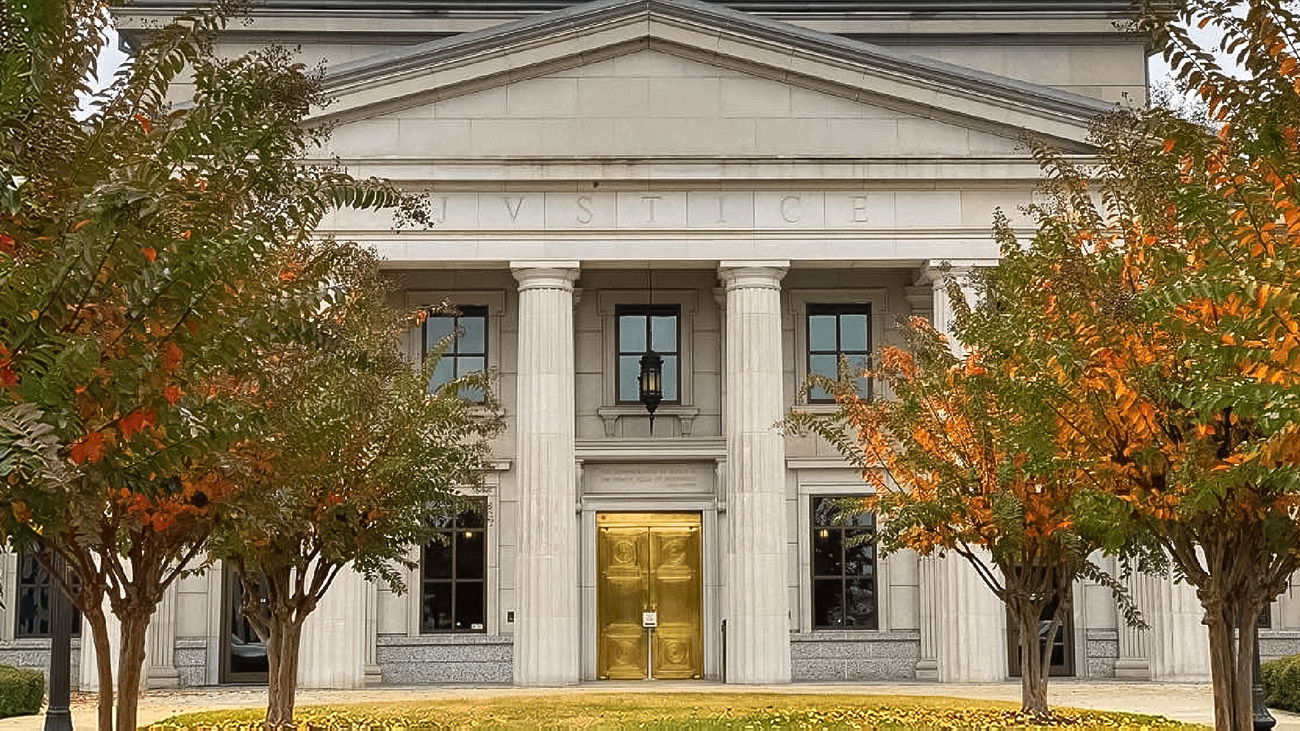
Despite that investment, Judge Marshall ruled that the tribe took a business risk prior to having a final, uncontested license. “The land is no doubt much less valuable now that Amendment 104 has scuttled casino gaming in Pope County,” he wrote. “But the Cherokee took a calculated business risk.”
Amendment 104, the center of the legal challenge, was spearheaded by a group called Local Voters in Charge (LVC) and supported by the Choctaw Nation of Oklahoma, which operates a casino just across the Arkansas border.
LVC’s campaign, backed by nearly $18 million from the Choctaw, pushed for eliminating Pope County as a potential casino site. Cherokee Nation Businesses spent almost $16 million in opposition but failed to sway the outcome. Voters approved the measure in the November 2024 election.
Marshall noted in his ruling that while LVC’s advertising campaign may have confused some voters, since a “yes” vote meant no casino and a “no” vote meant a casino, it did not amount to a constitutional violation. “Reasonable minds can differ on whether they misled voters,” he wrote, ultimately concluding that the measure did not specifically target the Cherokee Nation or amount to legislative punishment.
Regarding the Takings Clause, which deals with whether the government must compensate for property seized or rendered less valuable, Marshall wrote that federal courts are not the venue to pursue such damages from a state. He cited recent Supreme Court precedent indicating that a state legislature or claims commission is an adequate channel for seeking relief.
Marshall also rejected arguments that Amendment 104 singled out Cherokee Nation Entertainment in violation of the Bill of Attainder Clause. He stated that the measure did not mention the Cherokee Nation by name and applied broadly to any casino license issued for Pope County.
Even if the impact was most felt by the Cherokee Nation, Marshall found the amendment did not amount to the type of historical punishment barred by the Constitution. He cited past court decisions, noting that a legislative action does not become a bill of attainder simply because it harms a particular entity’s business interests.
Liga MX names Polymarket its exclusive prediction market partner for the US

Nevada casino net income falls 34.8% following 81.2% drop on Las Vegas Strip
Hard Rock Bet rolls out Matthew Broderick-led campaign for sportsbook and casino


Win Systems appoints Ana Aniceto to lead Country Manager & Sales in Peru

Flutter to delist from London on 3rd August as NYSE remains main trading venue

WagerWire receives Gibraltar approval in principle for prediction markets push

SOFTSWISS expands Casino Platform segmentation with real-time player targeting tools

Ready Play Gaming content set to go live via Nirmata Play


Hub Affiliations awarded at Le Fonti Awards 2026 as Excellence of the Year for Innovation & Leadership in iGaming


Day 1 of SBC Summit Americas spotlights prediction markets, AI and industry challenges

Boomerang Partners launches second stage of Golden Boomerang Awards 2026

BetMGM, Kaizen Gaming and Sportradar lead winners at SBC Awards Americas 2026