

UK Labour Party's manifesto brings significant changes to gambling
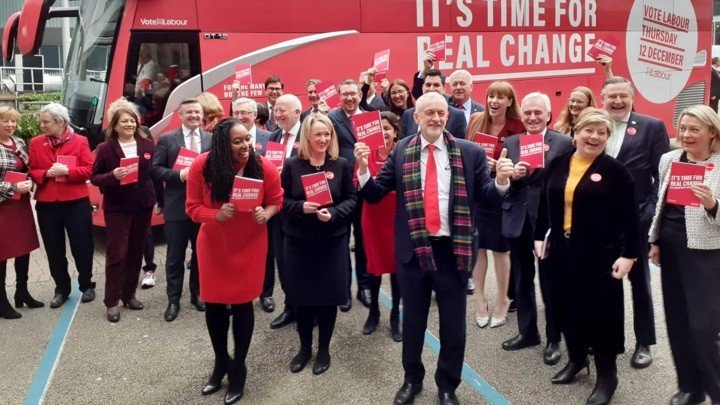
With the UK general elections scheduled for December 12, the Labour party and the Liberal Democrats have published their manifestos over the last two days, and gambling is one area where both parties appear to be in full agreement on the need for stronger regulation.
The Lib Dems are promising to “introduce a compulsory levy on gambling companies to fund research, education and treatment of problem gambling”. The party also wants to ban the use of credit cards for gambling, “restrict gambling advertising” and “establish a Gambling Ombudsman,” The Guardian reports.
Labour are also proposing a levy to tackle problem gambling and a “curb” on gambling advertising in sports, and promises to introduce “a new Gambling Act fit for the digital age”. Its wording is vague, but the aims of the new Act will, it seems, include “establishing gambling limits” and “mechanisms for consumer compensations”.
Should Labour eventually be in a position to legislate on gambling, it will be seeking to tighten up the regulation of the same industry which it deregulated so thoroughly last time around in 2005. That was the Gambling Act, which legitimised fixed-odds betting terminals (FOBTs) in betting shops. The legislation also failed to anticipate that the future of gambling was online, where gamblers can leave themselves at the mercy of an operator simply by clicking a box to agree to their terms.
Tom Watson, Labour’s former deputy leader, is stepping down as an MP at this election. He had long been one of the party’s key thinkers on gambling issues before his abrupt departure from politics, and he floated a lot of possibilities in a speech in February.
A long-overdue ban on gambling with credit cards is already a near-certainty, whoever wins the election. But Watson’s speech proposed going much further, introducing “a culture of limits” on online gambling, with “thresholds placed on the spend, stake and speed” that will give safeguards to customers.
The segment of VIP accounts – offering incentives to high-rolling losers to keep them betting – could be affected, while the use of free bets and odds to attract new customers is another practice that could be subject to close scrutiny.
As for horse racing, there could be some concern that while Watson was aware that the sport is uniquely intertwined with betting, whoever calls the shots on gambling following his exit may not be similarly disposed. A spokesman for the BHA (British Horseracing Authority) said on Thursday that “in its September 2018 gambling review, Labour outlined that it would provide exemptions for horse racing, recognising its intrinsic and traditional relationship with betting”, adding that “there is nothing in today’s manifesto which evolves that position.”
Watson’s claim that Labour would put “consumer protection at the centre of the online gambling industry” could equally apply to those whose bets are routinely refused or restricted to pennies.
Netherlands proposes gambling advertising ban with deposit limits and affordability checks

Illinois lawmakers shelve Pritzker plan to merge gaming and racing regulators

Austria nears gambling reform deal as coalition debates cooling-off period for operators


Soft2Bet wins SBC award for Industry Innovation of the Year in North America
BetMGM's Brazilian venture moves to acquire Bingão do Brasil in market expansion push

California's Jamul Casino Resort brings in Marcus Lucero as Vice President of Casino Operations

1spin4win launches charity initiative 'United for Impact' to support children's healthcare in Kenya


BGaming sets July date for second TRUE WAYS online conference

N1 Partners named finalist in three categories at G Gate Awards 2026

Day 1 of SBC Summit Americas spotlights prediction markets, AI and industry challenges


