

TD Garden's owners clarify their will to partner up for mobile sports betting in Massachusetts
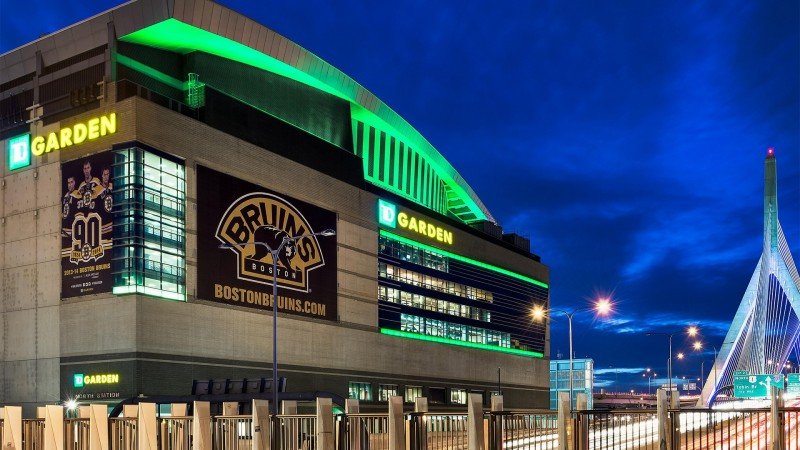
The company that owns TD Garden stadium said it wants in on sports betting, but retreated from its original idea to serve as a mobile sports betting provider in Massachusetts after state lawmakers raised concerns about a potential conflict of interest.
Delaware North, the USD 3 billion company whose chairman Jeremy Jacobs owns the Boston Bruins and chairs the NHL Board of Governors, originally presented its ownership and operation of nine casinos in seven states as indicative of its qualifications to serve as a provider of mobile sports betting in the Bay State, Boston Herald reports.
“We view sports wagering as a great opportunity for us to engage fans and get the casual fan interested in sports in a new way,” Amy Latimer, president of TD Garden, said in prepared testimony before the Committee on Economic Development and Emerging Technologies, which reviewed sports betting bills on Tuesday and Wednesday. “We understand gaming, sports and the customer, and Delaware North would like the ability to participate as a sports wagering provider.”
Lawmakers, however, raised concerns of a conflict of interest. “So if I buy a ticket and I go into the Garden and I’m watching the Bruins and I’m operating a sports betting app from my phone, what you’re asking for is to be able to own all three,” Sen. Eric Lesser asked Latimer.
Hours after Latimer’s testimony and grilling from lawmakers, Delaware North said it will simply want to partner with another company to make sports betting available to its customers. “Integrity of the game is of the utmost importance and we do not want any appearance of conflict of interest,” Latimer said in a statement released Wednesday afternoon. “We do not want to operate the sports book, but we do want to partner with a mobile operator that will enhance the fan experience.”
A representative for Fair Play Massachusetts — a Chicopee-based group of advocates and business owners — also testified before the committee Wednesday, saying Keno operators, particularly at sports bars and restaurants, should be able to offer sports betting.
“Allowing some Keno operators the ability to offer sports betting to their patrons kills 4 birds with 1 stone,” Fair Play spokesman Ryan McCollum said in prepared testimony. “Those birds are: more revenue for the state, support for our small businesses, fairness for citizens who don’t live close to casinos and a greater ability to make a dent on the black market.”
Executives from Boston-based DraftKings, Wynn Resorts, Plainridge Park Casino and MGM Springfield also made their case Tuesday before the committee.
Mass. Gov. Charlie Baker and lawmakers have filed several proposals to authorize sports betting online and at casinos, and to tax and regulate the new industry. Supporters of the proposals — several of which were heard by the Legislature’s Joint Committee on Economic Development and Emerging Technologies on Tuesday — say they will open a new revenue stream to help cities, towns and schools while cutting into illegal bookmaking markets that have flourished under federal prohibitions.
“We know that illegal wagering is occurring each and every day on the black market,” Mike Kennealy, Baker’s secretary of housing and economic development, told the panel. “One of our primary goals here is to transition sports betting activity from the illegal black market toward a more secure, regulated market.”
Kennealy said Baker’s proposal, filed in January, would authorize the state’s Gaming Commission to license casino operators to offer on-site wagering and allow Draft Kings and other daily fantasy sports operators to be licensed for online sports wagering. Betting would not be permitted on high school, college or amateur events.
Sports wagering businesses would be required to pay a $100,000 application fee and $500,000 licensing fee to the state that must be renewed every five years. Operators would pay a 10% tax on sports wagering inside casinos, while online bets would be taxed at 12.5%.
Sports betting operators face potential tax increase under North Carolina budget plan

American Place Casino breaks ground on permanent Waukegan facility, opening expected in 2028

FairGambling enters crypto casino market with verification and analytics tools

FairGambling enters crypto casino market with verification and analytics tools

EGT wins SiGMA Asia award for Best Land-Based Game Feature for second straight year

Bally’s Intralot reaches $326 million deal to acquire William Hill and 888 owner Evoke

Allwyn AG names Khalid Reede Jones as CEO of North America unit


Hub Affiliations awarded at Le Fonti Awards 2026 as Excellence of the Year for Innovation & Leadership in iGaming

Pidiots and the future of slot engagement: Why Slotmatic is building the intelligence layer behind the next generation of slots

Plinko, lottery, online casino: how Europe searches for iGaming


BGaming Charity Gala raises over €200,000 for DAR Bjorn respite center

SOFTSWISS names two winners at AI Hackathon 2026 as teams develop business-ready AI tools



