

US Senator seeks to ban loot boxes claiming similarities with problem gambling
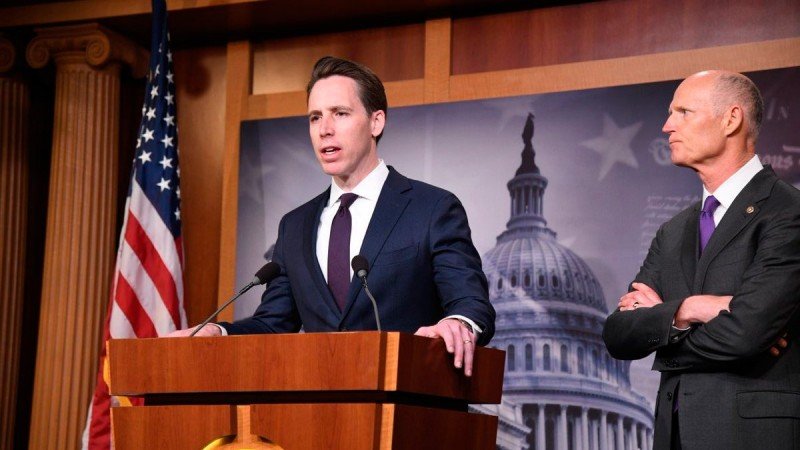
Missouri Republican Senator Josh Hawley announced last week he will introduce legislation that would ban video games from offering microtransactions like "loot boxes," or a random assortment of virtual rewards available to players for purchase. The bill would also ban "pay-to-win" designs, which entice players to spend money either to surpass "artificial" levels of difficulty or to gain competitive advantages over other players.
"Social media and video games prey on user addiction, siphoning our kids' attention from the real world and extracting profits from fostering compulsive habits," Hawley said in a statement on his website. "No matter this business model's advantages to the tech industry, one thing is clear: there is no excuse for exploiting children through such practices."
Last month, the government of Belgium said loot boxes were in violation of its gambling laws. Sweden is also investigating them, and the Chinese government has restricted the number of loot boxes players can open each day. The gaming industry said it had tools to limit in-game spending, and argues that loot boxes are not gambling because games do not offer players the option of cashing in their winnings and getting real-world money.
The Protecting Children from Abusive Games Bill would apply to games targeted to those under 18 and games with wider audiences "whose developers knowingly allow minor players to engage in microtransactions." Loot boxes are incorporated both in free and paid games, offer players randomized rewards for spending money, “combining the addictive properties of pay-to-win with the compulsive behavior inherent in other forms of gambling,” the statement explains.
Video game companies say features like loot boxes help them pay off the costs of developing a game and also make it possible for them to offer their games for free, CNN reports. But opponents call the practices exploitative, saying they promote compulsive behaviors in children that are similar to gambling and that they foster addiction in users.
In a paper published in peer-reviewed journal Addictive Behaviours, scientists at the University of British Columbia's centre of gambling research claim to have identified a link between problematic gambling behaviour and loot boxes.
"When a game is designed for kids, game developers shouldn't be allowed to monetize addiction," Hawley said. "And when kids play games designed for adults, they should be walled off from compulsive microtransactions. Game developers who knowingly exploit children should face legal consequences." Under the bill, the distribution of such games would be considered an unfair trade practice under the Federal Trade Commission.
In a statement, the Entertainment Software Association (ESA) said that numerous countries including Ireland, Germany, Denmark, Australia and the UK had determined that loot boxes were not akin to gambling. "We look forward to sharing with the senator the tools and information the industry already provides that keeps the control of in-game spending in parents' hands," it said. "Parents already have the ability to limit or prohibit in-game purchases with easy-to-use parental controls."
The ESA has previously said that efforts to regulate the gaming industry threatened its freedom to innovate and test new business models.
Digitain wins Platform Provider of the Year at SBC Awards Americas 2026

Lobbying efforts intensify around Washington, DC online gaming legislation


Digitain wins Platform Provider of the Year at SBC Awards Americas 2026

Star names former Bally's executive Ameet Patel dual CEO of Queensland integrated resorts

IGP receives final court approval to acquire Gamehost's Alberta casinos

BetMGM's Brazilian venture moves to acquire Bingão do Brasil in market expansion push

Real-time rewards: Why decision quality matters more than speed


Ready Play Gaming content set to go live via Nirmata Play



