

LeoVegas penalised for advertising and marketing failings
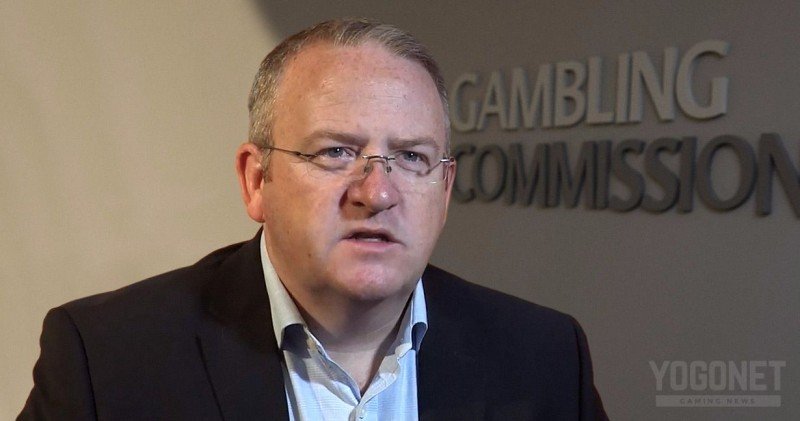
LeoVegas, the online gambling operator, has been penalised by the UK Gambling Commission for failings relating to misleading advertising and the handling of customers at the end of their self-exclusion period.
Following a review of LeoVegas’ licence the Commission has concluded matters on the basis that LeoVegas will pay a USD 816,621 penalty, will divest itself of any funds received as a result of the failings, and will pay the Commission’s costs.
During its investigation, the Commission found that LeoVegas:
-Was responsible for 41 misleading adverts
-Failed to return funds to 11,205 customers when they chose to self-exclude and close their account
-Sent marketing material to 1,894 people who had previously self-excluded
-Allowed 413 previously self-excluded customers to gamble without speaking to those customers first or applying a 24-hour cooling off period before allowing them to gamble.
The Commission identified that LeoVegas or its affiliates published 41 website advertisements between April 2017 and January 2018, and of these:
-31 failed to state significant limitations and qualifications relating to promotions, despite there being space to do so (eight on its own website and 23 on affiliates’)
-10 misled consumers, as the information needed to make an informed decision was presented in an unclear manner, contrary to CAP code 3.3.
This does not comply with the requirements in social responsibility code provision which states:
Licensees must abide by any relevant provision of the CAP (UK Code of Non-broadcast Advertising and Direct & Promotional Marketing (CAP Code)) or BCAP (UK Code of Broadcast Advertising (BCAP Code)) code, as the case may be, which relates to ‘free bet’, ‘bonus’ or similar offers and in that regard follow the CAP and BCAP ‘Guidance on the rules for gambling advertisements’. In particular that 'marketing communications (which include advertisements) must state significant limitations and qualifications. Qualifications may clarify but must not contradict the claims that they qualify.'
Further, social responsibility code provision 1.1.2(1)(a) states:
Licensees must take responsibility for third parties with whom they contract for the provision of any aspect of the licensee’s business related to the licensed activities and ensure that the terms on which they contract with such third parties:
require the third party to conduct themselves in so far as they carry out activities on behalf of the licensee as if they were bound by the same licence conditions and subject to the same codes of practice as the licensee.
These instances came despite:
-relevant rulings by the Advertising Standards Authority in March and July 2017 concerning breaches of the CAP code
-repeated engagement by the Commission explaining the requirements of social responsibility code provision 5.1.7, the CAP codes and LeoVegas’ responsibility for affiliates
-assurances from LeoVegas’ senior members of staff that the issues were being remedied.
LeoVegas acknowledged the breaches of these requirements and has implemented changes and improvements to processes and procedures to address these breaches. These include:
-review and revision of all policies and procedures relating to marketing compliance, in order to ensure compliance
-recruitment of a marketing compliance officer in both legal and affiliate teams
-training programme for marketing personnel, including CAP rules
-compliance approval of marketing as part of the sign off process
-actively seeking CAP advice as appropriate
-limiting the number of affiliates and excluding email or SMS messaging
-improving affiliate processes around on-boarding, breaches and terminations
-overhaul of affiliate terms and conditions
-affiliate training on compliance obligations through an information programme and guidebook
-compliance audits on affiliates to identify and remedy any issues revealed.
Whilst conducting the review into self-exclusions, LeoVegas identified 11,205 self-excluded accounts with outstanding balances.
This does not comply with the requirements in social responsibility code provision 3.5.3(5) which states:
Licensees must close any customer accounts of an individual who has entered a self-exclusion agreement and return any funds held in the customer account. It is not sufficient merely to prevent an individual from withdrawing funds from their customer account whilst still accepting wagers from them. Where the giving of credit is permitted, the licensee may retain details of the amount owed to them by the individual, although the account must not be active.
LeoVegas acknowledge that they operated in breach and have already returned balances to players where possible. They have identified c.€16,500 (approx £14,429) in outstanding balances, with the majority being less than £1.00. LeoVegas will divest itself of those funds by making an equivalent donation to charities for socially responsible causes.
LeoVegas has now implemented procedures to process the return of account balances within 48 hours of a self-exclusion. Every quarter it will also reconcile any account balances which could not be returned, or which are under £1.00, and make a donation of the equivalent amount to charities for socially responsible causes.
Following receipt of a complaint from a self-excluded customer on 1 June 2016, LeoVegas performed a review of its systems. The complainant had, following receipt of marketing material, been able to access their account and gamble. The review identified a software error which had occurred on 1 April 2016 and reactivated accounts where a self-exclusion or time-out had expired, despite no positive steps to return to gambling.
As a result of this error:
- 1,894 customers who were formerly self-excluded were sent marketing material without first agreeing to accept such material
- 413 customers who were formerly self-excluded were able to gamble without contacting customer services or being given a 24-hour cooling off period. A total of USD 308,787 (approx. USD 272,207) was deposited by these players over a period of two months.
- This does not comply with the requirements in social responsibility code provision 3.5.3(1) which states:
Licensees must have and put into effect procedures for self-exclusion and take all reasonable steps to refuse service or to otherwise prevent an individual who has entered a self-exclusion agreement from participating in gambling.
Nor adhere to ordinary code provision 3.5.4(5)(e)-(g) which states:
Licensees should take all reasonable steps to ensure that:
at the end of the period chosen by the customer, self-exclusion remains in place, for a minimum of 7 years, unless the customer takes positive action to gamble again;
where a customer chooses not to renew, and makes a positive request to begin gambling again, during the 7 year period following the end of their initial self-exclusion, the customer is given one day to cool off before being allowed to access gambling facilities. Contact must be made via phone or in person; re-registering online is not sufficient; and
notwithstanding the expiry of the period of self-exclusion chosen by a customer, no marketing material should be sent to them unless and until they have asked for or agreed to accept such material.
Upon identification, LeoVegas closed the accounts and returned depositsless withdrawals to all depositing players.
LeoVegas accepted the breach of the social responsibility code provision in that they did not take all reasonable steps to prevent individuals who had entered a self-exclusion agreement from participating in gambling. They also accepted that they did not have an alternative approach to that set out in the ordinary code, to achieve a similar effect. This impacted vulnerable customers.
LeoVegas has improved and tested their system design so that it is more robust and meets the provisions in the ordinary code, and tightened their access controls.
Conclusion
Our investigation found, and LeoVegas accepted, that that there were weaknesses in its systems relating to the proper management of self-exclusions, and it and its affiliates’ marketing material was non-compliant.
In determining the appropriate outcome, we took the following factors into account:
-Impact on the licensing objectives to protect vulnerable persons from being harmed or exploited by gambling, and to ensure gambling is conducted in a fair and open way
-Length of time taken to address the marketing issues, despite assurances given and extensive engagement
-Slow insight into marketing failings, particularly their responsibility for affiliates
-Missed opportunities to learn from previous public statements, particularly BGO and Lottoland
-Slow insight into the requirement to return funds on account closure
-Proactive return of €133,893 (approximately £117,000) to self-excluded players who had returned to gambling, where deposits exceeded withdrawals
-Admissions made and regulatory settlement proposed, albeit at the conclusion of a licence review.
Neil McArthur, the Gambling Commission’s Chief Executive said: “The outcome of this case should leave no one in any doubt that we will be tough with licence holders who mislead consumers or fail to meet the standards we set in our licence conditions and codes of practice. We want operators to learn the lessons from our investigations and use those lessons to raise standards. ”
1win launches FIFA World Cup 2026 tournament with 5M USDT prize pool

SmartSoft launches football-themed crash game World Champion X

Galaxsys to launch swipe-based instant game Instawin this month


Flutter to delist from London on 3rd August as NYSE remains main trading venue

Comtrade Gaming partners with 7bet for Latvia, Estonia and Finland expansion

Win Systems appoints Ana Aniceto to lead Country Manager & Sales in Peru

1spin4win launches charity initiative 'United for Impact' to support children's healthcare in Kenya

Ready Play Gaming content set to go live via Nirmata Play


Hub Affiliations awarded at Le Fonti Awards 2026 as Excellence of the Year for Innovation & Leadership in iGaming


Day 1 of SBC Summit Americas spotlights prediction markets, AI and industry challenges

BetMGM, Kaizen Gaming and Sportradar lead winners at SBC Awards Americas 2026



