

Governor Ralph Northam signs legislation aimed at reopening Colonial Downs
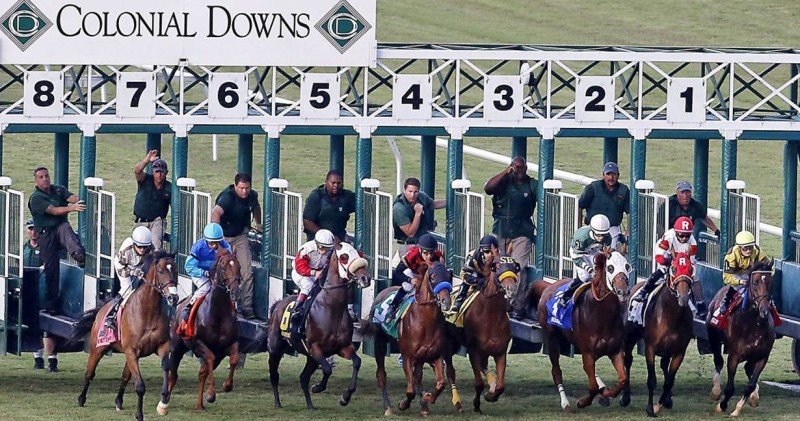
A new push to revive the shuttered Colonial Downs racetrack is off to a running start with legislation signed into law by Gov. Ralph Northam on Monday to allow gambling on historical (not live) horse races. The signing of the bill that allows the owner of Colonial Downs to operate gambling machines at the track -and at as many as 10 off-track betting facilities- was signed on Monday, but the governor also issued a directive to the state’s racing commission to hew to several cautionary principles as it writes the regulations covering the devices.
Northam said in his directive that the Virginia Racing Commission should write regulations that require the “placement of reasonable limitations on the proliferation” of gambling in the state and “maximize opportunities for public engagement, comment, and public review” during the drafting and approval of the regulations. The directive also called for “local community options in determining whether to allow” the devices, which are called historical horseracing machines but closely resemble slot machines.
Northam’s directive could provide a check on the ambitions of Colonial’s owners as they seek to reopen Colonial and establish a network of gambling parlors throughout the state. Colonial, which last held a live horse race in 2014, is currently owned by Jacobs Entertainment, but a Chicago-based group called Revolutionary Racing reached a deal to buy the track from Jacobs prior to this year’s legislative session, contingent on the legislation passing.
The devices authorized by the legislation have proved lucrative in other states for racetrack owners. In Kentucky, where the devices are installed at three racetracks, total handle on the machines in the fiscal year 2017 was $970 million, with track owners retaining $58.7 million of that total, according to Kentucky Horse Racing Commission records. Kentucky’s rules limit the machines to licensed racing facilities, but last year, the KHRC approved an application by Churchill Downs to operate the machines at its Trackside training facility in Louisville.
In addition to the track itself, located in New Kent, Virginia’s legislation permits Colonial’s owners to operate the machines at off-track betting facilities, which could theoretically lead to the establishment of gambling parlors in far-flung areas of the state as the track’s owners seek to maximize the market area of the devices. That could also lead to objections from local citizens, who may take a dim view of allowing devices that play like slot machines in their communities.
Currently, four OTBs are open in Virginia, and all are operated by the Virginia Equine Alliance, an umbrella group for horse interests in the state that was formed after Colonial shutdown and given the licenses to keep the simulcast facilities afloat. The state’s racing law, passed 20 years ago, allows for up to 10 OTBs, and it requires that local communities approve of the parlors through referenda.
Jeb Hannum, the executive director of the Virginia Equine Alliance, said on Tuesday that “perhaps 10” communities have passed referenda allowing for OTBs, even if no OTBs are currently located in the communities, but those referenda were conducted prior to the legislation authorizing the gambling machines passed. He said the results of those referenda will remain in force under the new law, but that could lead to difficulties if community leaders protest that the referenda were conducted in a different legal environment.
Asked if it may be more difficult to get local authorization for OTB parlors now that gambling machines are in the mix, Hannum said: “That’s a good question. I think it depends on the local communities and their needs.”
Legislation allowing for casino-type gambling at Colonial Downs went nowhere in prior years while Jacobs held the license for the track. But this year, the legislation passed with overwhelming majorities in both houses of the legislature. In his statement, Northam said he supported the legislation because he is hopeful the bill will “reinvigorate the horse industry and allow Thoroughbred racing to return to Virginia.”
That was the takeaway Hannum got from the directive.
“I think [Gov. Northam] is committed to seeing historical horse racing machines enable racing to restart, and for funds to go to horsemen and the racing industry,” Hannum said.
Under the law, the Virginia Racing Commission has 180 days to write the regulations from the date the law goes into effect, July 1. David Lermond, the executive secretary of the commission, declined on Tuesday to comment specifically on Northam’s directive aside from a statement that had been authorized for release by the commission, saying that commission members had only received the governor’s directive that morning.
“As directed by Governor Northam, the commission looks forward to the process of drafting comprehensive regulations for historical horse racing to ensure the integrity of the wagering activity in a manner consistent with the intent of the General Assembly,” the commission statement said.

Bally's Chicago gets one-year extension to complete permanent casino project

SCCG CEO Stephen Crystal named ambassador for SiGMA North America 2026


Digitain wins Platform Provider of the Year at SBC Awards Americas 2026

IGP receives final court approval to acquire Gamehost's Alberta casinos

Soft2Bet wins SBC award for Industry Innovation of the Year in North America
BetMGM's Brazilian venture moves to acquire Bingão do Brasil in market expansion push

Real-time rewards: Why decision quality matters more than speed


Ready Play Gaming content set to go live via Nirmata Play



