

Sports Betting in Detroit: a Win-Win for Casino Owners and the City
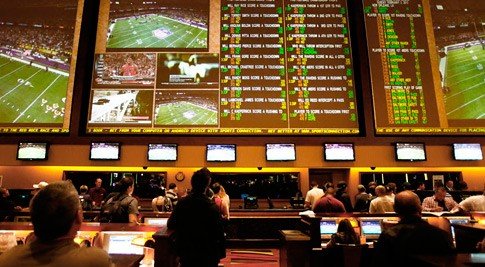
If the U.S. Supreme Court rules in favor of allowing sports gambling outside Nevada, such gambling modality could arrive in Detroit within two years.
There is some controversy around the issue since some Detroit casino owners have connections with sports teams.
How this would affect sports betting remains uncertain: One possibility is the gambling palaces wouldn’t be allowed to accept bets on the team it owns.
Major League Baseball prohibits team owners from operating casinos.
MotorCity Casino is operated by Marian Ilitch, whose family owns the Tigers baseball and Red Wings hockey teams. Greektown Casino is owned by Dan Gilbert, who also owns the Cleveland Cavaliers.
Sports betting supporters were thrilled by a U.S. Supreme Court hearing last week that discussed a federal law that prohibits sports gambling outside Nevada. During oral arguments, most of the justices seemed likely to rule against maintaining the ban. The court might issue a decision around June.
In 2017, 12 million to 15 million Americans bet illegally on sports with bookies and offshore sites, which earned $3 billion in revenue, according to an estimate by Eilers & Krejcik Gaming, a gambling research firm in Santa Ana, California.
“The sports betting customer is likely different than the typical casino customer,” said Chris Grove, managing director of Eilers & Krejcik. “It would create new customers and new revenue for casinos.”
After Ohio opened casinos in 2012, including in nearby Toledo, business in Detroit tumbled for two years before rising the next two. The revenue from Detroit’s three casinos in 2016, $1.3 billion, remains below the 2012 level, $1.4 billion.
A Greektown executive said it would be premature to discuss possible regulations because the court case hasn’t been resolved.
“Under the right and thoughtful regulatory framework, we generally support legalization of sports betting,” said Matt Cullen, chief executive of JACK Entertainment, which runs Greektown.
Detroit’s other casino, MGM Grand, said it would welcome sports gambling.
“Our company’s longstanding position is that sports betting should be legalized outside of Nevada in those states that choose to offer it,” spokeswoman Mary Hynes said in a statement.
If sports betting is allowed, Michigan would likely be among the first wave of 14 states to offer it, according to Eilers & Krejcik Gaming.
Its estimate is based on various factors, including whether a state has pending legislation, constitutional obstacles against it and how badly the state needs money.
Michigan is one of 15 states where legislation has been introduced to legalize sports betting if the federal ban were overturned, according to the American Gaming Association in Washington.
State Rep. Robert Kosowski, D-Westland, who proposed the Michigan bill in January said that locals can take a three-minute drive across the Ambassador Bridge and bet legally on sports at Caesars Windsor Casino. So those bettors end up spending their eating and drinking and gambling money in another city, not Detroit, he said
Even if the Supreme Court upholds the federal ban, proponents of sports gambling argued it will be legalized in the not-too-distant future. They said times have changed since the rule was implemented 25 years ago and that gambling has become more acceptable across the country.
Support for a repeal of the ban seems to be gaining favor in Congress, said Dennis Gutwald, a Las Vegas attorney who specializes in gaming law.
“Sports and sports betting just go together and always have,” he said.
Sports betting is already widespread, proponents said. So states should make it legal so it can be regulated and raise money through taxes.
An analysis of Kosowski’s bill by the Michigan House Fiscal Agency found that sports betting comprises 2 percent of the gambling revenue in Nevada.
Using that as a guide, sports betting would have boosted the amount Michigan received in gambling taxes last year from $112 million to $114 million, and Detroit’s share from $175.5 million to $179 million. But the proposed legislation faces an uncertain future in the Republican-run Legislature.
Gutwald said states are in no position to be turning down money.
“It’s a lot of upside for those entities (that offer sports betting), which, in turn, will likely lead to more tax revenue for the states,” he said.

Digitain wins Platform Provider of the Year at SBC Awards Americas 2026

AGEM names David Lucchese and Marcus Prater as 2026 Memorial Award Winners

Digitain wins Platform Provider of the Year at SBC Awards Americas 2026

IGP receives final court approval to acquire Gamehost's Alberta casinos

California's Jamul Casino Resort brings in Marcus Lucero as Vice President of Casino Operations

Soft2Bet wins SBC award for Industry Innovation of the Year in North America

Real-time rewards: Why decision quality matters more than speed


Ready Play Gaming content set to go live via Nirmata Play


SCCG CEO Stephen Crystal named ambassador for SiGMA North America 2026



